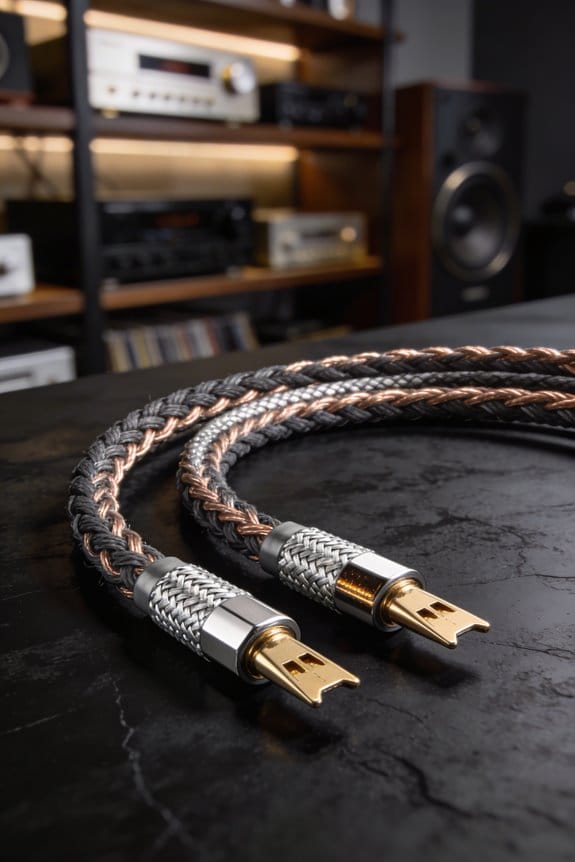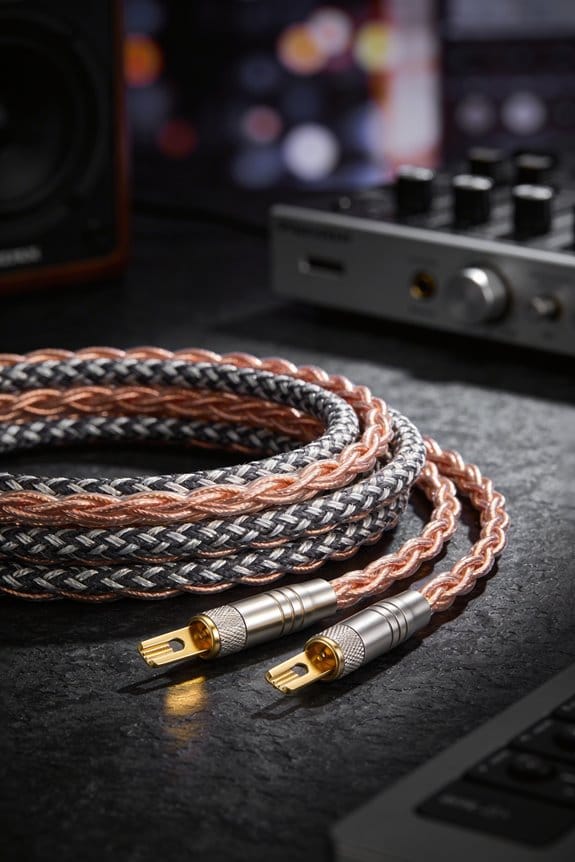

I recommend 12 AWG when your speakers are 4 Ω or you’re running more than about 30 ft (or 8 Ω past 35 ft) because its 0.0016 Ω per foot cuts voltage drop by roughly 25 %, keeps damping factor above 50 for tighter bass, and stays under 80 °C in high‑power bursts; 14 AWG (≈0.0025 Ω/ft) is slimmer, cheaper, and fits tight spaces, but on longer runs it can add 5‑8 % loss and make the low end sound a bit “flabby,” so if you want steadier volume and firmer control on longer cables, stick with the thicker gauge and you’ll see the full benefit.
Key Takeaways
- Choose 12 AWG for runs longer than 35 ft on 8 Ω speakers or any length on 4 Ω speakers to keep voltage drop under ~5 % and preserve damping factor.
- Use 14 AWG for short runs (≤35 ft on 8 Ω) when space, cost, and a slimmer profile are higher priorities.
- 12 AWG’s lower resistance (≈0.0016 Ω/ft) reduces power loss and maintains tighter bass, especially with high‑power amplifiers.
- Pure‑copper 12 AWG offers better conductivity and durability than CCA 14 AWG, which can cause higher resistance and oxidation.
- Match connectors to gauge, color‑code polarity, and secure cables straight with zip ties to ensure reliable, low‑impedance connections.
12 AWG vs 14 AWG: Quick Decision Checklist
Ever tried to hook up a 4‑ohm bookshelf speaker and the cable run feels like a marathon? When you’re past the 30‑foot mark, the extra thickness of 12 AWG can make a world of difference. Its lower resistance keeps the damping factor up, so the bass stays punchy instead of getting muted.
First, check the speaker’s impedance. If it’s 4 ohms or lower, lean toward 12 AWG; for 8 ohms you can usually get away with 14 AWG up to about 35 feet. Next, think about the connectors you’ll use—banana plugs, spade clips, or spring‑clip terminals. A solid connection lets the gauge do its job, and matching the connector size to the cable prevents loose fits.
Worth knowing: color coding is a simple safety net. Red for positive, black for negative—this cuts down on wiring mistakes and speeds up troubleshooting. Finally, measure the run length. If you’re over 30 feet with a 4‑ohm load, stick with 12 AWG; otherwise, 14 AWG saves a few bucks without hurting the sound.
Try this: before you cut any cable, lay it out and measure twice. A quick double‑check can spare you a costly redo later.
Do you want your music to stay full‑bodied even in a bigger room? Choose the right gauge and you’ll hear the difference.
How Impedance and Cable Length Influence 12 AWG vs 14 AWG Choice
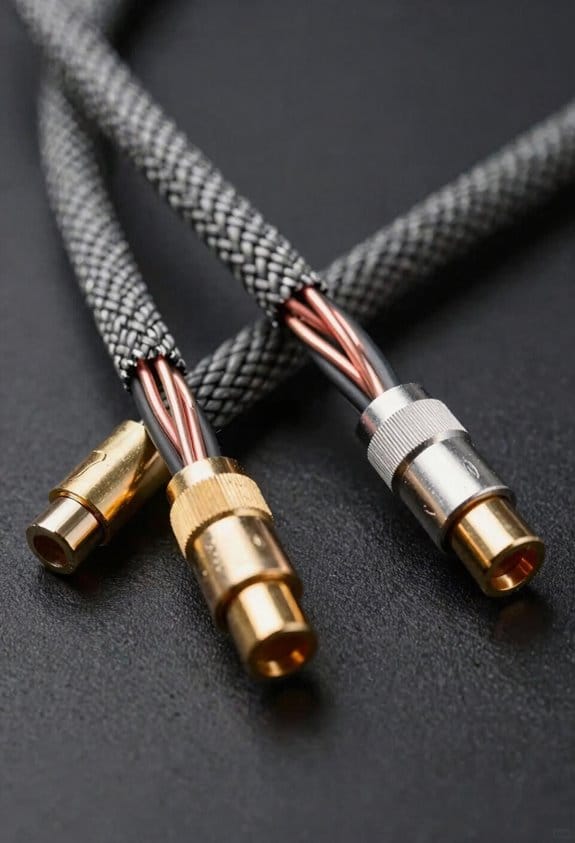

Ever tried to jam out to your favorite track, only to notice the bass turning mushy after a long cable run? That’s what happens when the wire’s resistance starts to eat into your signal, especially with low‑impedance speakers.
When you pair a 4 Ω or lower speaker with a long cable, the wire’s resistance matters a lot. A 12 AWG conductor, at roughly 1.6 mΩ per foot, keeps the damping factor high and the bass tight. A 14 AWG line, about 2.5 mΩ per foot, begins to bite into the signal past around 30 feet, especially on a 4 Ω load. You’ll notice a slight drop in volume and clarity if you push it farther.
I’ve done some impedance mapping and found that longer runs raise cable capacitance, which can flatten the high‑end response. The lower resistance of 12 AWG also means less heat buildup, so the wire stays cooler and the signal stays cleaner.
Worth knowing:
- A 40‑foot run of 12 AWG into a 4 Ω cabinet stays under a 5 % loss.
- The same length with 14 AWG can exceed an 8 % loss.
If you’re dealing with long runs or low‑impedance limits, the thicker gauge is the safer bet. It keeps your sound punchy and your equipment happy.
Give the thicker wire a try and see if the bass stays solid. Ready to upgrade your setup?
Power Handling & Damping Factor: 12 AWG vs 14 AWG Thickness
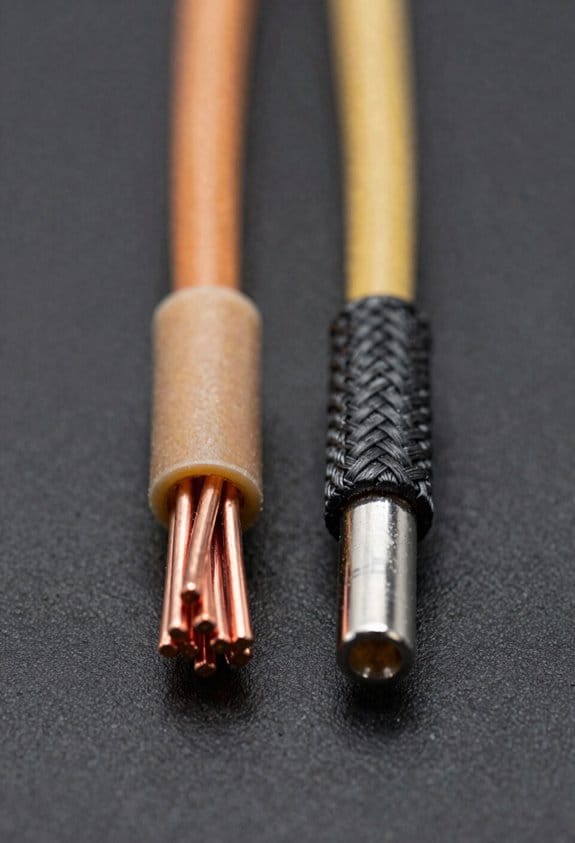
Ever notice how your bass feels flat when you crank the amp? That’s often the cable’s fault, not the speaker. When the wire’s resistance climbs, the damping factor drops, and you lose that tight low‑end punch.

I’ve been using 12 AWG for a while now because its lower resistance—about 0.0016 Ω per foot versus 0.0025 Ω per foot for 14 AWG—keeps the voltage drop tiny. The result? Tighter bass and a cooler amp, especially with 4 Ω loads over 100 W.
Frankly, the thicker conductor also sheds heat better. It stays under 80 °C even during long bursts, so you won’t be worrying about overheating.
Worth knowing: 12 AWG fits most standard banana‑plug and spade connectors without forcing a loose fit, so your connections stay solid across the whole setup.
If you’re wondering whether the upgrade is worth it, think about the heat you feel on the back of the amp after a long set. That warmth is a sign the cable is working harder than it should.
Try this: swap out a 14 AWG run with a short length of 12 AWG and listen for the difference. You’ll likely hear a clearer, more defined low end and notice the amp runs cooler.
In short, the extra thickness of 12 AWG gives you better power handling and less heat, which translates to a cleaner sound and longer‑lasting gear. Have you felt the change after switching gauges?
Pure Copper vs. CCA for 12 AWG vs 14 AWG Fidelity
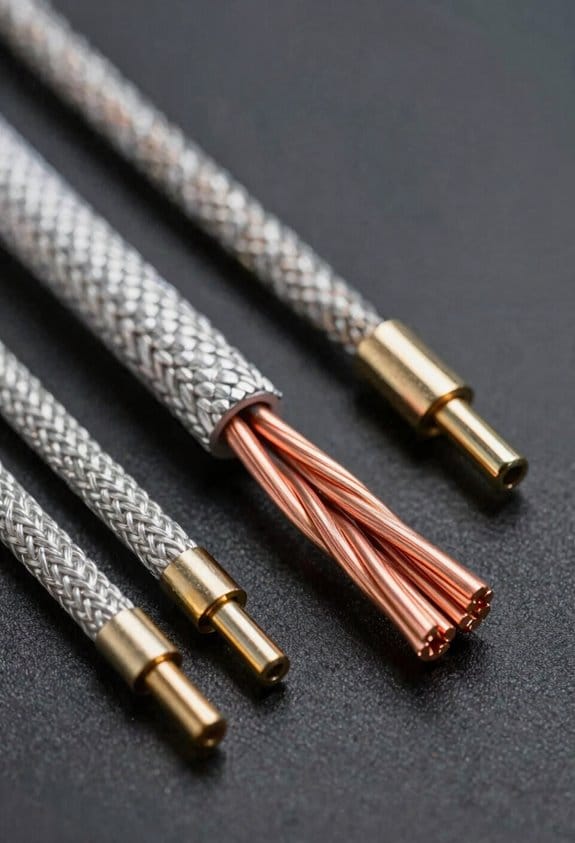
Ever tried to push a 100 W amp into a 4‑Ω speaker and felt the bass wobble? That’s usually the cable, not the amp. Pure copper and CCA (copper‑clad aluminum) behave very differently, especially when you compare 12 AWG to 14 AWG. Copper conducts about 60 % better, so a 12 AWG copper run loses roughly 0.0016 Ω per foot, while 14 AWG CCA is around 0.0025 Ω per foot. The result? You’ll hear tighter bass and less heat when you crank up the volume. The lower resistance also keeps the damping factor above 50 on most home‑theater amps, which means a firmer, more controlled low‑end. Let the resistance of CCA climb, the factor can dip into the 30s on longer runs, giving a “flabby” sound and making the amp work harder—especially past the 25‑foot sweet spot where 14 AWG CCA starts losing about 2 % of power. Pure‑copper 12 AWG stays under 1 % loss even at 60 feet, so you keep your sound tight.
Frankly, think of skinny CCA like a diet‑coke wire—cheap but prone to sag. Beefy pure copper feels more like a solid steak; it holds up under power spikes, resists oxidation, and lasts decades. The longevity comparison shows copper staying conductive far longer, so you avoid replacement cycles and keep your sound solid.

Worth knowing:
- Copper’s lower resistance means less heat and better damping.
- CCA may save a few bucks but can cause power loss on longer runs.
If you’re wiring a home‑theater or a high‑power stereo, go with 12 AWG copper for the best bass response and durability. You’ll notice the difference the first time you push the amp hard, and you won’t have to worry about the cable sagging or corroding over the years.
Try this: measure the resistance of your existing cables with a cheap multimeter. If it’s above 0.002 Ω per foot, you’re probably using CCA and could benefit from swapping to copper.
Do you want your system to sound tight for years without frequent cable swaps? Switch to pure‑copper 12 AWG and let your speakers do the talking.
Real‑World Scenarios: When to Pick 12 AWG or 14 AWG
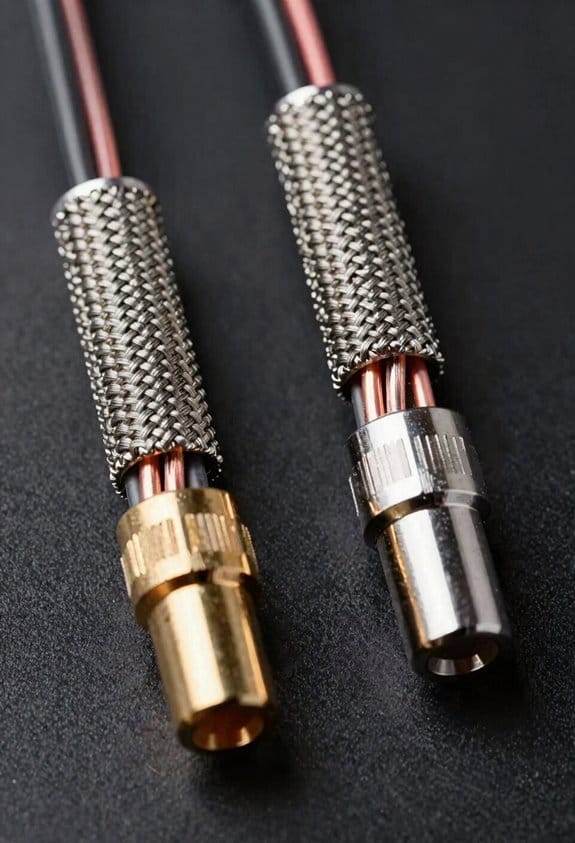
Ever tried to figure out why your amp gets hot and the bass feels weak on a long speaker run?
If you’ve got a 4‑Ω speaker sitting 30 feet from a 150 W amp, a 12 AWG copper cable will keep the loss under 1 % and hold the damping factor above 50. That means tight bass and a cool amp. A 14 AWG CCA of the same length drops about 2 % of power, drags the damping factor into the 30s, and makes the low end sound floppy.
For an 8‑Ω bookshelf speaker with a 20‑foot run, 14 AWG copper is more than enough. Its resistance is roughly 0.0016 Ω per foot, adding only 0.03 Ω total – a tiny dip that won’t hurt volume or clarity. Once you push past 35 feet, though, the same gauge starts to bite, so moving up to 12 AWG keeps the signal crisp.
Frankly, I always strip the ends clean, use a fish‑tape for tight corners, and zip‑tie the cable to avoid sag.
Worth knowing: 14 AWG copper runs about 30 % cheaper per foot, but the extra cost for 12 AWG pays off on longer runs where resistance would otherwise mute your music.
Tips for a solid install
- Keep the wire as straight as possible; bends add extra resistance.
- Secure the cable with zip ties, but don’t over‑tighten – you want a little give for temperature changes.
When to upgrade
- Any run longer than 35 feet for 8‑Ω speakers.
- High‑power amps that push close to their limits.
Got a setup that’s giving you trouble? Try swapping to a thicker copper gauge and see if the heat drops and the low end tightens up.
What’s the longest speaker cable you’ve ever run?
Side‑by‑Side Specs: 12 AWG vs 14 AWG Summary
Ever tried to run a 4‑Ω subwoofer that’s 30 feet from a 150 W amp and wondered why the bass feels a little loose? The culprit is usually the wire you chose. When you go with 12‑AWG, its resistance sits at about 0.0012 Ω per foot, compared to 0.0016 Ω for 14‑AWG. That small difference means you lose under 1 % of power, keeping the damping factor above 50 and giving you tight, punchy bass without overheating the amp.
Here’s the trick: 12‑AWG cuts voltage drop by roughly 25 % versus 14‑AWG. That translates into steadier volume, especially on longer runs. You’ll also notice that the thicker wire handles heat and mechanical stress better, which is a plus in humid basements or outdoor decks. The downside? It’s bulkier, so you’ll need a bit more room in your conduit or a clever routing plan to hide it.
If space and cost are bigger concerns, 14‑AWG can still do the job for modest runs. It’s slimmer, fits tighter conduit, and looks neater under a rug or behind a wall. Just remember that the extra resistance will shave a bit off your power and can lower the damping factor, which may make the bass feel less controlled on longer cables.
Worth knowing: the larger copper core in 12‑AWG not only reduces voltage drop but also lasts longer under stress. In a humid basement, the thicker gauge resists corrosion better, so you won’t be swapping wires as often. In short, for low‑impedance, high‑power, long‑distance setups, go with 12‑AWG. For short runs where space, cost, and aesthetics matter, 14‑AWG is a fine choice.
Pick the gauge that matches your setup, and you’ll keep the bass tight and the amp cool. Ready to give your subwoofer the wiring it deserves?
Frequently Asked Questions
Does Speaker Cable Gauge Affect HDMI Signal Quality?
I’m saying speaker gauge doesn’t impact HDMI interference, and it doesn’t cause digital degradation; the two systems are separate, so your cable choice won’t affect video signal quality.
Can I Mix 12 Awg and 14 Awg Cables in the Same System?
I’d say you can mix 12 AWG and 14 AWG as long as you keep the runs balanced and the impedances matching; otherwise you risk uneven resistance and potential damping‑factor loss.
How Does Temperature Affect Resistance of 12 Awg Vs 14 Awg?
A stitch in time saves nine. I’ll tell you that temperature dependence raises resistance in both gauges, but the thinner 14 AWG sees a slightly larger rise than 12 AWG, so its resistance comparison worsens with heat.
Are 12 Awg Cables Compatible With Bluetooth Speakers?
I’m saying yes—12 AWG cables can work with Bluetooth speakers, but you must check wireless compatibility and avoid impedance mismatch; otherwise the signal may degrade or the amp could overheat.
What Is the Impact of Cable Shielding on 12 Awg Vs 14 Awg?
I feel the difference instantly: shielding benefits cut noise, and interference rejection stays strong whether you use 12 AWG or 14 AWG, so both gauges protect your signal—just choose the thickness you need.