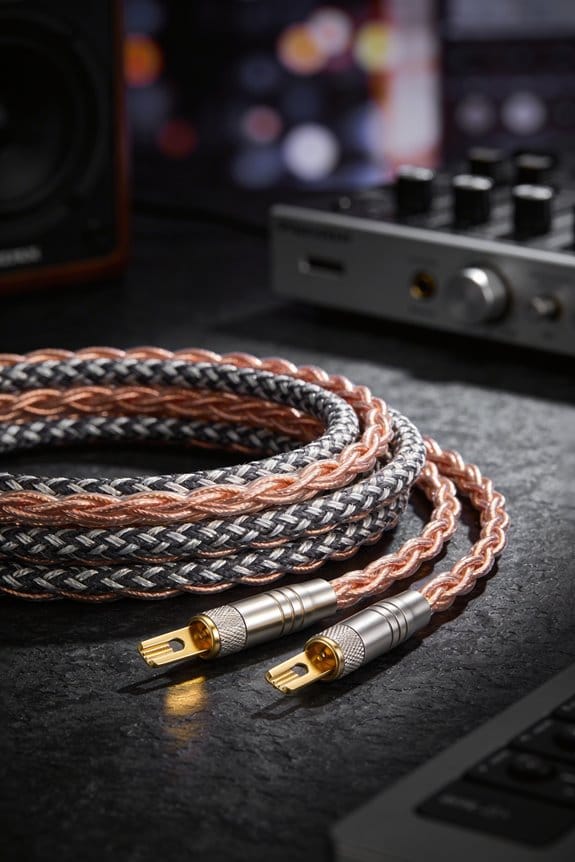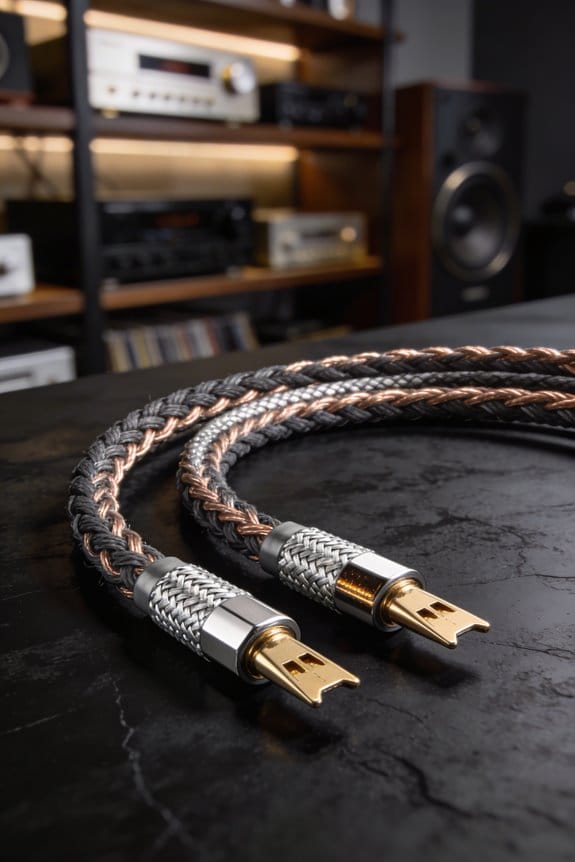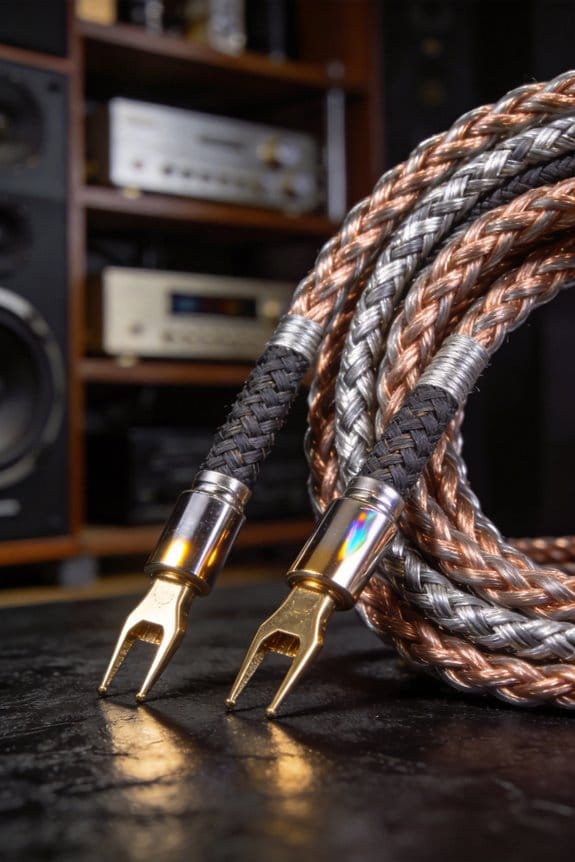

I recommend 12‑gauge copper for any run over 100 ft because its resistance is only about 0.0016 Ω per foot, keeping voltage drop under 3 dB and preserving bass punch and clarity, while also staying cool under high power; if you’re pushing a lot of watts, 10‑gauge drops the loss a bit more, giving you roughly 2 dB loss at the same distance, and both gauges avoid the muffled sound you get with 16‑ or 18‑AWG on long runs. You’ll see why the extra cost pays off, and the next section shows how 70‑volt systems compare.
Key Takeaways
- Use thicker gauge (12‑ or 10‑AWG) for runs over 75 ft to keep voltage drop below 3 dB and preserve power.
- For 30–50 ft runs, 14‑AWG is safe with 4‑Ω speakers; 16‑AWG works for 8‑Ω loads.
- Short runs (≤25 ft) can use 18‑AWG without noticeable loss, but 16‑AWG adds headroom for high‑power amps.
- Calculate resistance per leg; aim for total loss under 0.05 Ω (≈0.2 dB) for transparent sound.
- Consider 70‑volt systems for very long distances; they allow thinner wire while maintaining low loss.
How to Choose the Right Speaker Wire Gauge
Ever tried to plug in new speakers and wondered why the sound feels a bit flat? The trick lies in the wire you use. Lower numbers mean thicker copper, so a 12‑gauge cable carries more current than an 18‑gauge one. That extra thickness cuts resistance, reduces voltage drop, and lets more power hit your speakers.
First, check your speaker’s impedance. A low‑impedance 4‑Ω load benefits from a thicker gauge to keep loss low, while an 8‑Ω set can get away with a slightly thinner wire. Next, look at the connector type—banana plugs, spade lugs, or bare‑wire terminals all need a solid mechanical bond, so pick a gauge that fits snugly without forcing the connector to stretch.
For a 30‑ft run to 8‑Ω cabinets, 16‑gauge works fine. If you’re dealing with a 4‑Ω load and the run exceeds 40 ft, bump up to 12‑gauge to keep voltage drop under 3 % and avoid audible dullness. This balance keeps costs down, stays flexible, and delivers solid performance without over‑engineering.
Worth knowing:
- 12‑gauge for 4‑Ω, 40 ft+ runs
- 16‑gauge for 8‑Ω, up to 30 ft
Try this: measure the distance from your amp to the speakers, then choose the gauge that matches the guidelines above. You’ll notice a clearer, fuller sound without spending a fortune on cable.

Got a favorite wire brand that’s worked for you? Let’s hear about it.
Speaker Wire Gauge for Short Runs (≤25 ft) – ≤3 dB Loss?
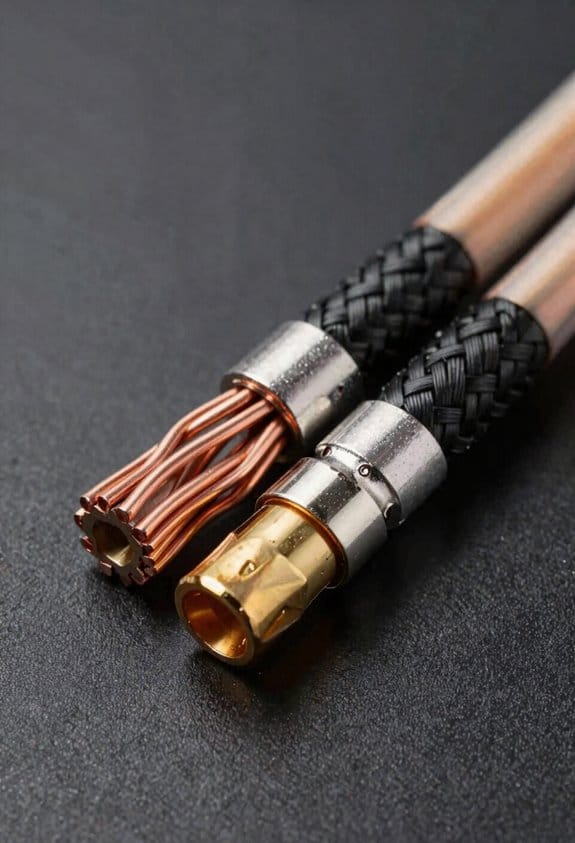
Ever tried to get that crisp sound from your bookshelf speakers but kept hearing a dull thud because the cable was the culprit? You’re not alone—many of us have wrestled with picking the right wire gauge for short runs and ending up over‑paying or under‑performing.
For runs up to about 25 ft, 18‑gauge wire usually does the trick. Its resistance adds only around 0.08 Ω per leg, which means you lose roughly 0.3 dB on an 8‑Ω speaker. That’s barely anything, so the power you push through the amp reaches the cabinet almost unchanged. You’ll notice the same punch and clarity as if the speaker were sitting right next to the amp, and you won’t have to shell out for pricey, over‑engineered cable.
If you’re running a 4‑Ω load or just want a bit more safety margin, bump up to 16‑gauge. That drops the resistance to about 0.05 Ω, shaving the loss down to under 0.2 dB. The amp sees the intended load, and you keep the sound tight and balanced without any surprise dips in volume.
Worth knowing:
- 18‑gauge for 25 ft, 8‑Ω → ~0.3 dB loss
- 16‑gauge for 25 ft, 4‑Ω → <0.2 dB loss
Frankly, the difference you’ll hear between these two options is barely perceptible, but the extra headroom with 16‑gauge can be a nice peace‑of‑mind if you push your amp hard.
Speaker Wire Gauge for Medium Runs (30‑50 ft) – Stay Under 3 dB?
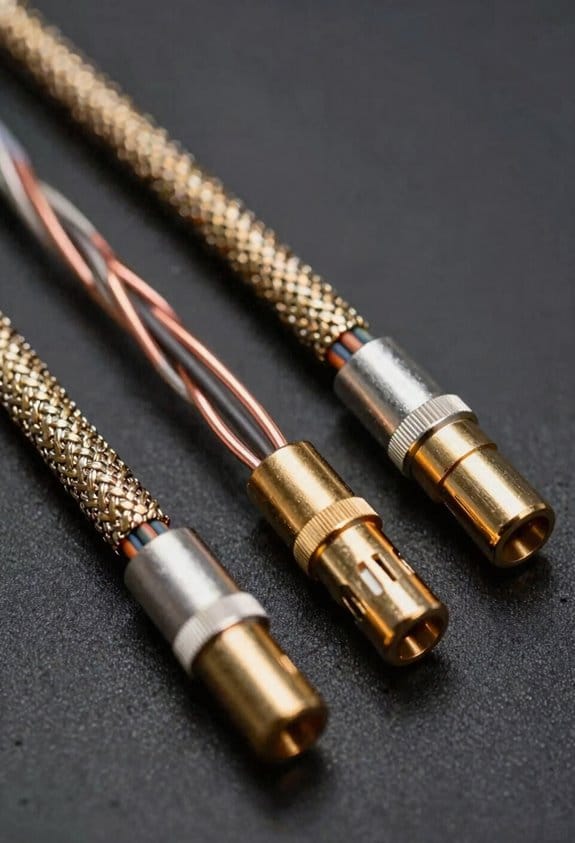
Ever tried to move a couple of bookshelf speakers across a living‑room wall and then noticed the volume dropping on a 30‑ft run? That thin wire you grabbed is probably the culprit – the resistance builds up fast and each extra ohm cuts a few decibels.

The quick fix is to step up the gauge. For 8‑ohm speakers, 16‑gauge works fine for a 30‑ft stretch, while 14‑gauge is safer for 40‑50 ft. Those sizes keep the voltage drop under 3 dB, so your amp stays happy and the sound stays balanced. The thicker copper means less loss, so the bass stays tight and the highs stay clear, avoiding that muffled feel you get with 18‑gauge.
Fair warning: if your speakers are 4‑ohm, bump up to 14‑gauge for the same distance. The extra thickness lets the amp deliver its full power without whining, and you won’t have to worry about overheating the wires.
Worth knowing:
- Use 16‑gauge for 30‑ft runs with 8‑ohm loads.
- Switch to 14‑gauge for anything longer than 40 ft or for 4‑ohm speakers.
Try this: measure the resistance of your cable before you install it. If it’s more than a few ohms, you’ll see a noticeable dip in volume.
By keeping the wire gauge up to the task, you’ll preserve impedance matching and a flat frequency response, letting every song sound the way it should.
Got a favorite speaker setup? Let me know how you handle long runs in the comments.
When to Upgrade to 10‑ or 12‑Gauge for 100‑ft+ Runs?
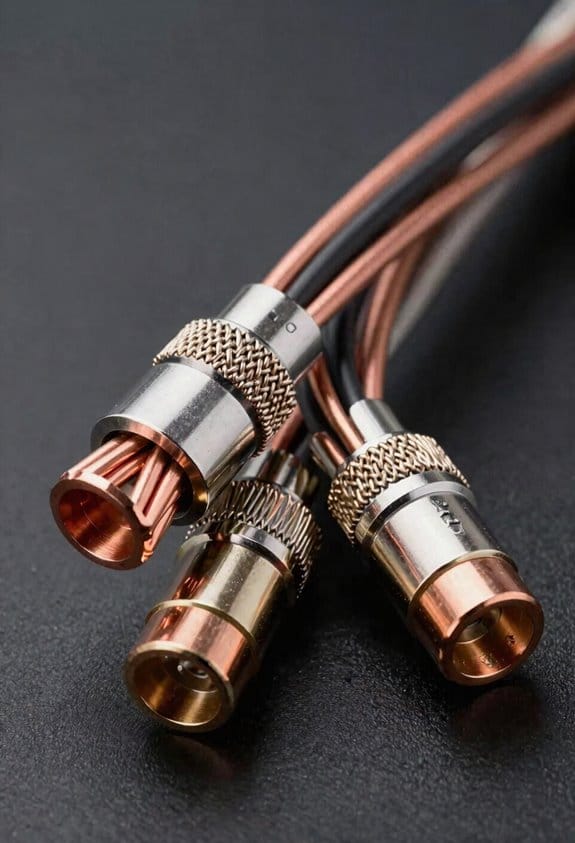
Ever tried to run a speaker line past 100 feet and noticed the sound getting thin? When the cable gets that long, the resistance of a standard 16‑gauge wire starts to bite, and you’ll see a voltage drop that can push the loss over 5 dB. That’s why many of us switch to 10‑ or 12‑gauge copper for those marathon runs.
A 12‑gauge cable keeps the loss under 3 dB at 100 feet with an 8‑ohm load, which means about 90 % of the amp’s power still reaches the driver. You’ll hear solid bass and clear highs even when you crank the volume. The extra thickness also helps keep the wire cooler, so you won’t worry about overheating during a long movie night.

If you want the absolute best performance, a 10‑gauge run drops the loss to roughly 2 dB. That extra headroom preserves punch and detail, making it a smart choice for high‑power home‑theater or professional setups. It does cost a bit more, but the upgrade saves you from future replacements.
- Check the gauge before you buy; 12‑gauge is a safe bet for most 100 ft+ runs.
- Go 10‑gauge if you need maximum power and minimal loss.
Frankly, keep an eye on signal integrity—thicker copper gives a cleaner waveform. Also, factor in installation cost; it rises modestly with gauge but pays off in the long run.
Try this: measure the resistance of your existing wire with a simple multimeter. If it reads higher than 0.05 Ω per 100 feet, you’re probably already losing more than 5 dB.
In practice, a 12‑gauge run gives you a comfortable margin, while a 10‑gauge run is worth the extra expense when you need every ounce of power. Ready to upgrade your speaker wiring and hear the difference?
Speaker Wiring Alternatives: 70‑Volt Systems vs. Thick Copper
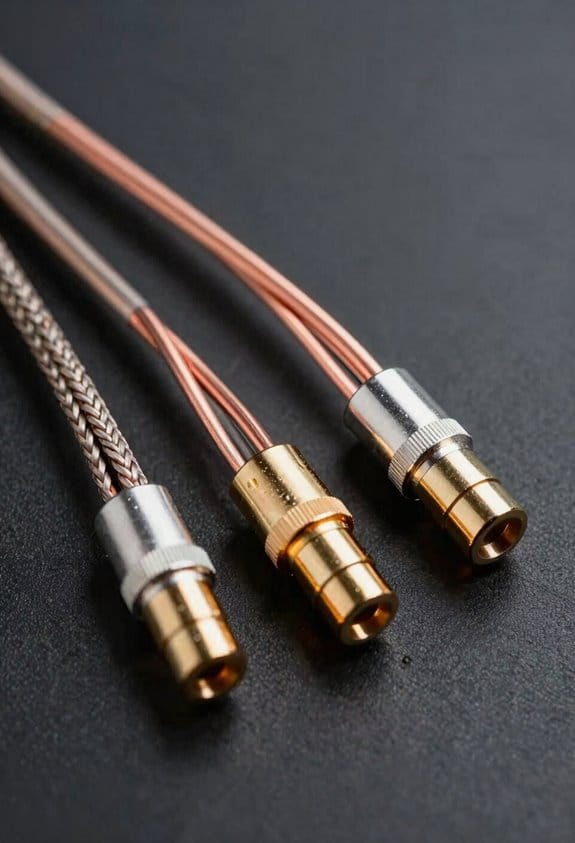
Ever tried to get crystal‑clear music in every room of a big house without drowning in wires?
If you go with a 70‑volt system, a single 12‑gauge cable can stretch up to 6,000 feet and still stay under a 3 dB loss. That means the sound stays loud and clear even in the farthest corner, while thick‑copper 12‑ or 10‑gauge runs start losing punch after just 100‑125 feet. The built‑in transformer selection in a 70‑volt setup does the impedance balancing for you, so you don’t have to worry about tone dropping on long runs.
Worth knowing:
- 70‑volt gear costs a bit more up front, but you save on labor and avoid pulling massive gauge wire through walls.
- Thick copper forces you to manually match speaker impedance, and any mismatch can degrade tone.
Honestly, the 70‑volt route feels like a true long‑throw solution. You’ll notice consistent volume and clarity across miles, and you won’t have to fiddle with speaker specs every time you add a new zone. Thick copper still works fine for short‑to‑medium distances, but you’ll end up with thinner bass and quieter highs if you push it too far.
Try this: run a short test with a 70‑volt transformer and a 12‑gauge line to the farthest room. If the level stays solid, you’ve got a system that will handle the whole house without a hiccup.
When you compare costs, the extra equipment for 70‑volt is worth the peace of mind. You’ll spend less time pulling wire and more time enjoying music.
So, which path feels right for your home?
Let me know how it works out for you.
Frequently Asked Questions
Can I Use Aluminum Speaker Wire for Long‑Distance Runs?
I wouldn’t recommend aluminum speaker wire for long runs; its corrosion resistance is lower and its mechanical strength can’t match copper, so you’ll likely see higher resistance and signal loss.
Do Speaker Impedance Values Affect Gauge Requirements?
I picture a river of current; higher speaker impedance eases the flow, so you can stick with a thinner gauge, but remember cable capacitance still adds resistance, especially on longer runs.
How Does Temperature Affect Speaker‑Wire Resistance?
I tell you that temperature raises resistance according to its temperature coefficient, so in ambient extremes the wire gets hotter, its resistance climbs, and you’ll need a thicker gauge to keep voltage drop low.
Will Bi‑Wire or Tri‑Wire Configurations Reduce Loss Over Long Runs?
I’ll tell right away: bi‑amping or tri‑wiring doesn’t magically cut loss on long runs; the wiring misconceptions say thicker gauge does. Bi‑amping benefits lie in speaker control, not distance‑related resistance reduction.
Is a Balanced (XLR) Connection Better for Long Speaker Cables?
I think a balanced XLR connection gives you a clear advantage for long speaker cables because its differential signaling provides superior cable noise rejection, keeping your signal clean over extended distances.