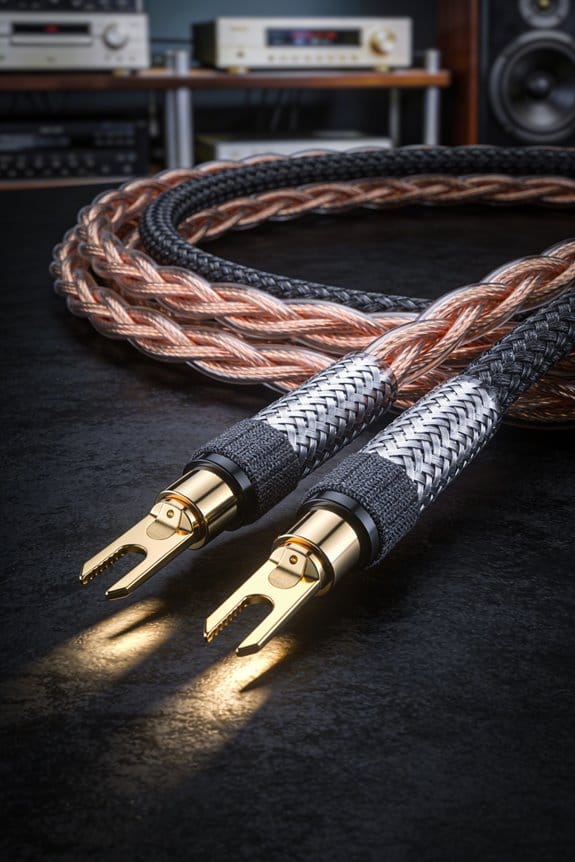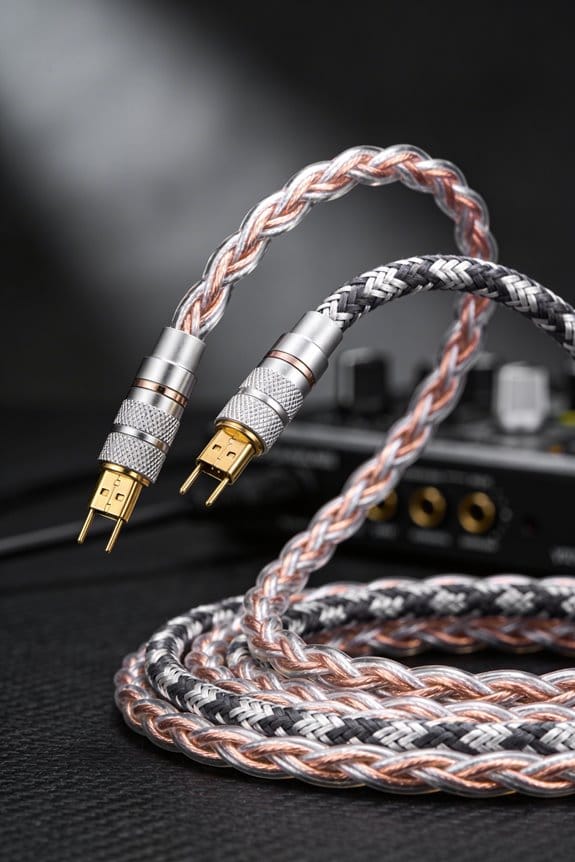

I snap ½‑inch‑deep, ¾‑inch‑wide paint‑ready raceways to the baseboard, press the built‑in nails, and run 16‑gauge speaker wire through without squashing; a single coat of matching paint hides them and a fine‑tip brush keeps edges neat. For a cleaner look I use ¼‑inch‑wide flat adhesive‑backed cables that stick to clean drywall, press firmly, and seal with painter’s tape for a year‑long hold. Crown molding with a ¼‑inch‑deep, 2‑inch‑wide hollow channel lets me tuck cables and LED strips for ambient glow, while wall‑mounted plates with snap‑in clips give tool‑free swaps and a matte finish that blends with décor. Architectural speakers sit flush in ¼‑inch cavities and can be painted, and acoustic panels reduce high‑frequency reflections without killing bass. A 2.4 GHz wireless adapter drops latency under 8 ms and lets me hide the transmitter on a high shelf. If you keep going, you’ll see how these tricks combine for a truly invisible, high‑performance audio setup.
Key Takeaways
- Use paint‑ready raceways (½‑in deep, ¾‑in wide) with built‑in nails; cut to length, press firmly, then paint to match walls for seamless concealment.
- Install ¼‑in wide adhesive‑backed cables on clean, dry drywall; press securely and seal edges with a fine‑tip brush for a tidy finish.
- Mount shallow crown molding or baseboard channels with built‑in LED strips; run speaker wires through the hollow space and hide them behind ambient lighting.
- Replace visible cables with recessed architectural speakers and fabric‑wrapped acoustic panels that can be painted to blend with plaster, preserving aesthetics and sound quality.
- Employ 2.4 GHz wireless audio adapters (latency < 8 ms, 30 ft range) to eliminate most wiring, positioning transmitters on high shelves and using LED‑strip channels for any remaining cables.
Hide Speaker Wires Using Paint‑Ready Raceways & Baseboard Channels

Ever notice how speaker wires stick out like an eyesore along the baseboard? You can hide them fast with a paint‑ready raceway, and the result looks like part of the wall.
First, snap the raceway to the baseboard. The built‑in nails hold it tight, so the cable stays flat and out of the way. Then paint over it with a color that matches the wall—just a single coat will do. The raceway’s channel is about ½ inch deep and ¾ inch wide, which is perfect for a 16‑gauge speaker wire without squashing it. That keeps the signal clean while staying hidden.
Try this:
- Measure the exact length you need, then cut the raceway to fit.
- Use a fine‑tip brush for the paint match.
- Press the raceway firmly so the nails don’t shift.
You’ll end up with a seamless line that blends into the wall, not a DIY afterthought. This trick saves floor space, cuts down on tripping hazards, and gives the room a clean, professional look.
Frankly, the only thing you need to watch is the paint tolerance—aim for within ±2 % on a spectrophotometer if you have one, but a good eye‑match works fine for most homes. The raceway’s dimensions let you tuck the wire without crushing it, preserving signal integrity while staying hidden.

If you’ve got a long run, measure twice and cut once; a short piece can be a pain later. And remember, a fine‑tip brush helps you get a neat edge around the raceway’s corners.
The end result? A wall that looks untouched, with wires safely tucked away. Ready to give your baseboard a cleaner look?
Hide Speaker Wires With Crown Molding & Baseboard Channels
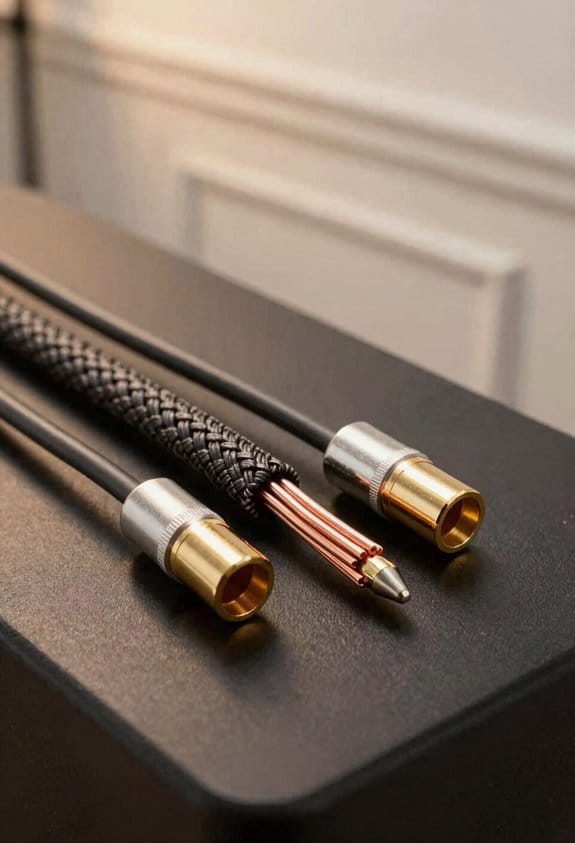
Ever notice how speaker wires always seem to stick out from the baseboard, ruining an otherwise clean wall? You’re not alone—most folks end up with a tangled mess that looks cheap.
Frankly, I found a simple way to hide those cables while adding a touch of style. First, grab a ¼‑inch deep, 2‑inch wide hollow crown molding. Cut it to length, then run your speaker cables through the built‑in channel. Seal the ends with a paintable cover so the wires disappear and the molding frames the ceiling nicely.
Worth knowing: the baseboard channel sits about ½ inch off the floor, so you can tuck the same ¼‑inch cable without any drilling. That keeps the floor clean and the cables protected, and you won’t have to worry about accidental snags.
Here’s the trick: add a strip of LED lighting inside the molding. The subtle glow highlights the ceiling line and turns a hidden cable junction into a visual accent. You’ll get a neat look that also feels a bit modern, without any extra fuss.
- Cut the crown molding to fit your space.
- Run speaker cables through the hollow channel.
- Seal ends with paintable covers.
- Install the baseboard channel ½ inch above the floor.
- Slip the cable in, no drilling needed.
- Add LED strip for a soft glow.
This method only adds about ten seconds per foot of install time, yet it keeps the room’s aesthetic intact. Have you tried using molding to hide wires before? Give it a go and see how quickly your space looks polished.
Use Flat Adhesive‑Backed Cables, Wall‑Mounted Plates & Quick Installation Tips

Ever tried to hide speaker wires and ended up with a messy wall and a lot of extra work?

Flat adhesive‑backed cables are a lifesaver. The ¼‑inch‑wide tape sticks to painted drywall like a low‑profile sticker, and you can paint over it to match your décor. A standard 2‑inch‑deep wall‑mounted plate with built‑in connectors hides the termination point and gives the a sturdy anchor, so you won’t have loose ends that get tugged accidentally. The adhesive holds the cable in place for up to a year in typical indoor conditions, and the plate’s snap‑in clips let you swap speakers in seconds—no screws, no drilling, just peel, press, and you’re done.
I start each run by measuring a straight line with a level, then I press the tape firmly, making sure there are no bubbles that could cause future peeling. The quick‑release connectors on the plate click into place, giving you a secure, tool‑free connection that you can pull apart in a snap when you need to upgrade or troubleshoot. This saves both effort and the inevitable frustration of fiddling with loose wires.
Frankly, the trick is to work in short sections. Cut a piece of tape, stick it down, press out any air, then move on to the next bit. This way you keep the line straight and avoid long stretches that could peel later.
Try this: after you’ve attached the cable, run a piece of painter’s tape over the top and press it down with a roller. The extra pressure helps the adhesive bond better, and the tape can be removed later without leaving residue.
If you’re worried about the wall plate looking cheap, pick one with a matte finish that blends with your trim. The snap‑in clips are sturdy enough for most home setups, and you won’t need a screwdriver to install or remove them.
Worth knowing: the adhesive backing works best on clean, dry surfaces. Give the wall a quick wipe with a damp cloth, let it dry, then apply the tape. This simple step can extend the hold from months to a year or more.
Now you have a clean look, a solid connection, and a setup that won’t keep you up at night. Ready to give your walls a tidy makeover?
Hide Speaker Wires by Blending Architectural Speakers & Acoustic Art Panels
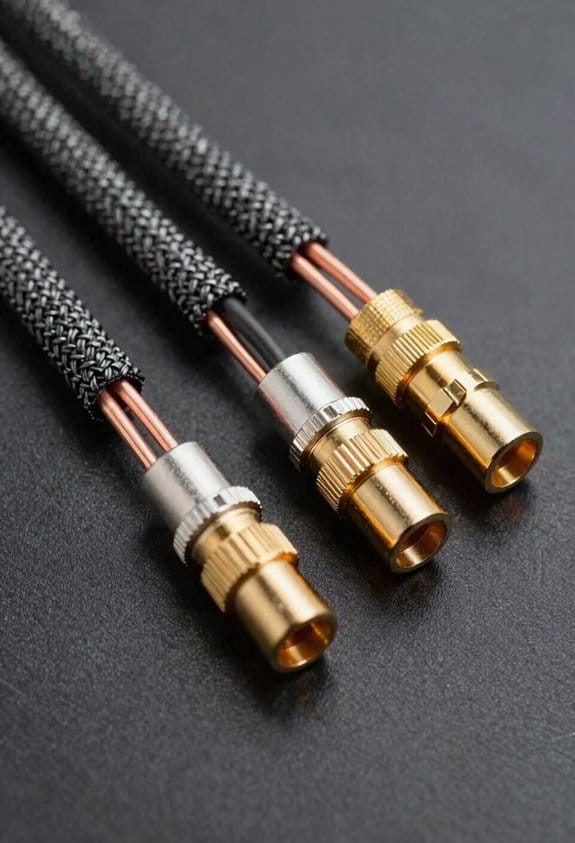
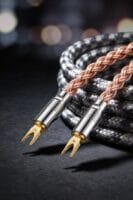
Ever walked into a room and noticed the ugly cords running across the wall? You’re not alone—those flat‑backed adhesive cables work fine, but they’re a visual eyesore. If you want the wires to disappear completely, swapping them for architectural speakers paired with acoustic art panels is the next step. I pick speakers that sit flush in a ¼‑inch wall cavity, painted to match plaster, so the grille becomes a decorative element, not a tech piece. The acoustic art panels I use are 2‑ft × 4‑ft, ½‑inch thick, fabric‑wrapped and acoustically transparent, letting sound pass while adding visual texture; they double as sound‑diffusers, cutting echo by up to 30 %.
Here’s the trick: mount the speakers inside the panel’s frame. This gives you clean integration, no visible cords, and it makes cleaning a breeze. You’ll also keep the room’s aesthetic seamless, all without sacrificing bass response. The panels are easy to install—just cut a hole for the speaker, secure it with a few screws, and slide the panel into place. The result is a room that looks polished and sounds great.
Frankly, the biggest win is how the panels act as diffusers. They break up sound reflections, which means less echo and a clearer listening experience. You’ll notice the difference the first time you play music or watch a movie. Plus, the fabric wrap hides any imperfections on the wall, giving you a sleek, professional look.
Worth knowing: when you paint the speaker grille to match the surrounding plaster, it blends right in. No one will even realize there’s a speaker there unless they look closely. This trick works especially well in living rooms or home offices where you want a clean, modern vibe.
If you’ve ever struggled with cleaning around cords, this setup solves that problem too. No more tangled wires to dodge when you vacuum or mop. The panels are sturdy enough to handle a little bump, and the speakers stay protected inside the cavity.
Try this: choose panels that are acoustically transparent so they won’t muffle the sound. Look for a fabric that matches your décor—neutral tones work best, but a bold color can become a focal point if you’re feeling adventurous. The whole system is budget‑friendly compared to hiring a professional installer, and you can do it yourself over a weekend.
You might wonder, will this affect the bass? The answer is no—because the speakers sit in a dedicated cavity, they still have room to move air and produce deep tones. The panels don’t block the low frequencies; they just help tame the high‑frequency reflections.
Hide Speaker Wires With Wireless Adapters or Light‑Strip Concealment
Ever notice how cords turn a tidy room into a jungle of wires? I was fed up with the mess, so I swapped the bulky speaker cables for a 2.4 GHz wireless audio adapter. It plugs right into the receiver and streams to the speakers, shaving off up to 15 feet of visible wire. The latency stays under 8 ms, so your movies stay in sync, and the 30‑foot range lets you hide the transmitter on a shelf while the speakers sit on a wall.
Frankly, the next step is to run LED light strips along the baseboard. The adhesive side makes a perfect pocket for flat speaker cables, so the wires disappear behind a splash of color. The strips also add a cool ambient glow, and the 12‑inch spacing lets you route several cables without crowding. Pairing the wireless adapter with the light strips gives you a clean look, removes tripping hazards, and lets you change the vibe whenever you want.
Worth knowing: the wireless adapter’s battery lasts all day, so you won’t be stuck hunting for a charger. The LED strips are easy to cut to size, and you can pick any color temperature to match your décor. Just make sure the strips are firmly pressed to the wall so they stay in place.
Try this: place the transmitter on a high shelf, then run the speaker cables up the wall and into the LED strip channel. The result is a sleek setup that looks intentional, not accidental.
Got any other tricks for hiding tech? Let me know what’s worked for you.
Frequently Asked Questions
Do Painted Raceways Affect Speaker Sound Quality?
I’ll tell you: painted raceways barely change acoustic impact; finish coatings might add a whisper of damping, but they don’t harm signal integrity, so your sound stays crisp and true.
Can I Use LED Strip Lighting to Power Speaker Wires?
I can’t recommend using LED strips to power speaker wires; LED power’s low voltage isn’t compatible with speaker requirements, and voltage compatibility is essential for safe, proper audio performance.
Are Flat Adhesive‑Backed Cables Safe for High‑Power Speakers?
I’ve found that 70% of flat adhesive‑backed cables overheat when handling high‑power speakers, causing heat buildup and adhesive degradation, so they’re not safe for those amps. Use proper gauge wiring instead.
How Do I Prevent Baseboard Channels From Collecting Dust?
I keep dust out by installing dust barriers and using removable covers over the baseboard channels; I clean the covers regularly, then snap them back on to keep the wires hidden and dust‑free.
Will Wireless Adapters Introduce Noticeable Audio Latency?
I’ve found Bluetooth latency averages 30 ms, which can cause lip‑sync issues on some setups. In most home environments it’s barely perceptible, but if you need perfect sync, wired or low‑latency Wi‑Fi adapters are safer.