I’ll tell you straight: thicker speaker wire cuts resistance, so a 12‑gauge run of 30 ft adds only about 0.03 Ω versus the 0.09 Ω of 18‑gauge, which means the amp can push a few extra watts into an 8‑Ω speaker and the bass feels tighter, but you won’t hear a dramatic volume jump unless the run is long or the cabinet is 4 Ω, where every milliohm counts. In short, you get better damping and a cleaner low‑mid, not a volume boost, and the rest of the guide will show you exactly how to size your wire for any setup.
Key Takeaways
- Thicker wire lowers resistance, preserving more voltage and power at the speaker, but the gain is usually only a few percent.
- For typical home setups (≤30 ft, 8 Ω speakers), 16‑gauge already stays within a 5 % impedance increase, so louder sound isn’t noticeable.
- Longer runs or low‑impedance (4 Ω) cabinets benefit more; 12‑gauge can keep power loss under 2 % versus noticeable loss with thinner gauges.
- The audible difference is most evident at high volumes or when the amplifier is driven hard, where resistance‑induced voltage drop becomes audible.
- Upgrading gauge mainly improves damping factor and tonal tightness, not a dramatic loudness boost.
Quick Gauge‑Selection Cheat Sheet for Common Speaker Impedances
Ever tried to hook up an 8‑ohm bookshelf speaker with a 15‑foot cable and wondered why the sound feels a bit muffled? It’s usually the wire gauge. A 16‑gauge run keeps the resistance low enough—under the 5 % limit—so your amp’s damping factor stays solid and you lose barely any power.
Quick Gauge‑Selection Cheat Sheet for Common Speaker Impedances
- For 8‑ohm loads:
- 16‑gauge works up to about 20 feet.
- 14‑gauge stretches that to 30 feet.
- 12‑gauge is safe beyond 40 feet.
- For 4‑ohm speakers:
- 14‑gauge is the minimum for a 10‑foot run.
- 12‑gauge covers 20 feet comfortably.
- 10‑gauge handles anything longer.
- Keep voltage drop negligible by choosing a gauge that stays well under the 5 % impedance increase.
- For 8‑ohm speakers, 16‑gauge is fine up to about 30 ft; go to 14‑gauge if you need a bit more headroom.
- For 4‑ohm speakers, stick with 14‑gauge up to 20 ft, then jump to 12‑gauge for longer runs.
- Use the longest run you can get away with; shorter runs mean less resistance.
- Keep connections tight; loose terminals add extra resistance and can cause hiss.
- Inspect each connector every few months.
- Use a small screwdriver to tighten any loose screws.
- Write the speaker’s location on a piece of tape and stick it near the plug.
If you’re bi‑wiring, split the voice coil and let each half use its own gauge. That cuts down impedance mismatch and adds a bit more clarity to the mix.
Frankly, the numbers are simple enough to remember, and they’ll keep you from that dreaded “mismatch” sound. Try this: keep an eye on the length of your run and match it to the gauge listed above. Your ears will thank you.
Got a different setup at home? Let me know how it works out.

Recommended Products
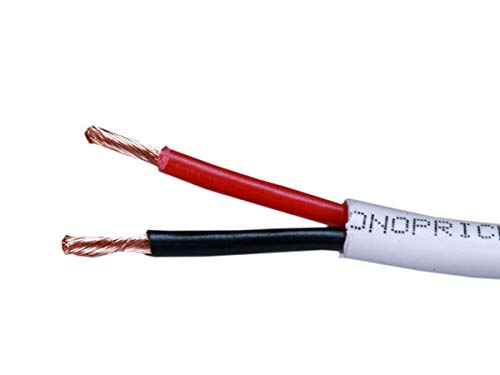
Lifetime Warranty on ALL Cables: With Monoprice's Lifetime Warranty you can rest assured we stand behind our products and our customers.

Powerful amplifier and bass shaker combo optimized to add earth shaking bass for movies, games, and music

16AWG, 2 CONDUCTORS, WHITE JACKET, 1000FT BOX. 16 gauge speaker cable, featuring 26 strand Oxygen-Free Copper conductors. Built to exacting standards with zero compromises.
How Wire Thickness Affects Speaker Impedance (Speaker Wire Gauge)


Ever notice how your favorite tunes lose a bit of punch after a long run of speaker wire? That’s usually the wire’s thickness messing with your speaker’s impedance.
Thicker wire means lower DC resistance, so a 12‑gauge run of 30 ft adds only about 0.03 Ω. That keeps the total impedance inside the safe 5 % range and preserves the damping factor. Thinner 18‑gauge over the same distance adds roughly 0.09 Ω, which can sag voltage and mute highs.
At high frequencies, the skin effect pushes current to the outer copper layer, making the effective resistance rise a few percent. The impact is tiny unless you’re using ultra‑thin wire.
Worth knowing: a larger gauge also resists connector corrosion better. The thicker metal surface holds a solid connection even when oxidation builds up, preventing intermittent loss of power.
If you’re wiring a pair of 8‑ohm speakers and you’re a 30 ft away, a 12‑gauge cable is a safe bet. For 4‑ohm speakers, the same gauge adds just enough resistance to stay within the 5 % rule.
Frankly, you don’t need to overthink it—pick a gauge that matches the distance and the speaker’s ohm rating, and you’ll keep the sound clean.
Try this: measure the length of wire you need, then check a simple gauge‑to‑resistance chart before you head to the store.

Got any other wiring quirks you’ve run into? Let’s hear them.
Recommended Products
Lifetime Warranty on ALL Cables: With Monoprice's Lifetime Warranty you can rest assured we stand behind our products and our customers.
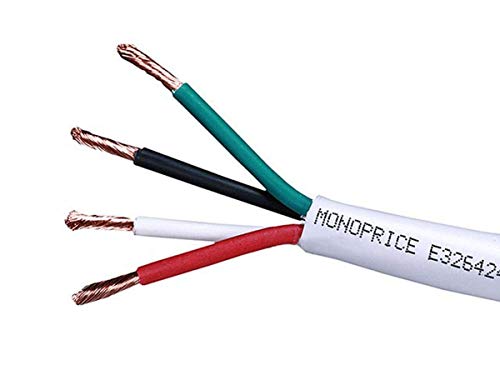
Oxygen-free 99.95% pure bare copper conductors
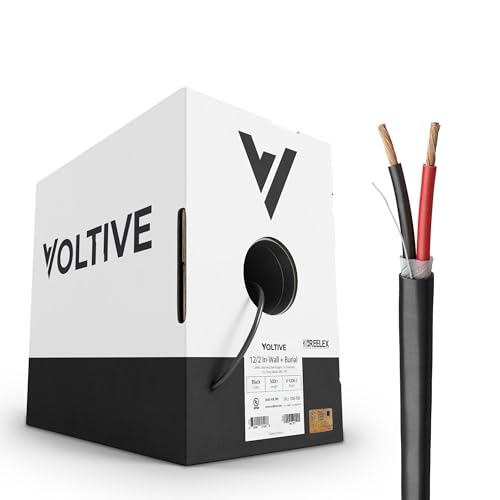
12AWG, 2 CONDUCTORS, BLACK JACKET, 500FT BOX. Premium 12 gauge speaker cable, featuring 65 strand Oxygen-Free Copper conductors and a super-luxe outer jacket. Built to exacting standards with zero compromises.
Calculate Safe Cable Lengths by Impedance (Speaker Wire Gauge)

Ever tried to run a long speaker wire and wondered if the extra resistance will mute your music? You’re not alone—many of us have been there, watching the gauge numbers and hoping the sound stays punchy.
First, figure out how far you can go before the wire’s resistance starts to bite into the speaker’s impedance. A 16‑gauge cable adds about 0.016 Ω per 100 ft, so a 30‑ft run to an 8‑ohm speaker only bumps the total to roughly 8.005 Ω. That’s well under the 5 % rule, so your damping factor stays solid. The same length of 18‑gauge adds about 0.036 Ω, pushing the load to 8.036 Ω and you might notice a tiny loss of punch. For 4‑ohm loads the margin tightens. A 20‑ft run of 14‑gauge (≈0.012 Ω) keeps the impedance under 4.02 Ω, but 16‑gauge over 20 ft adds about 0.032 Ω, edging the total to 4.032 Ω and potentially dulling the highs. In those cases, upgrading to 12‑gauge for anything over 30 ft is a safe bet, no matter the speaker’s rating.
Fair warning: long runs can sag, and a hanging bundle stretches and raises resistance. Heat also plays a role—thermal derating can add a few milliohms, which might tip a tight 5 % margin in a high‑power setup.
Here’s the trick:
If you’re wiring a home theater or a big‑room setup, you’ll want to double‑check the total length and maybe add a little extra slack for movement. The extra few milliohms won’t hurt, but they can add up if you’re pushing the limits.
Honestly, the most noticeable thing is how the sound feels after you make the change. You’ll often hear a tighter bass and clearer highs, especially on longer runs. And because the resistance stays low, the amp doesn’t have to work as hard, which can extend its life.
Try this: measure the exact length of your run, add a small safety margin, and pick the next thicker gauge up. It’s a simple step that saves a lot of headaches later.
Got a favorite wire gauge you swear by? Let’s hear it.
Recommended Products

Professional 3-Way Speaker System: Features a comprehensive driver configuration with a 12-inch full-range woofer for deep bass, a 6.5-inch midrange driver optimized for live entertainment and karaoke vocals, and a 1-inch tweeter with double magnet design for crispy clear high-frequency sounds and vocal reproduction

𝗘𝗡𝗛𝗔𝗡𝗖𝗘 𝗬𝗢𝗨𝗥 𝗦𝗣𝗔𝗖𝗘 𝗪𝗜𝗧𝗛 𝟮𝟬𝟬𝟬𝗪 𝗛𝗢𝗠𝗘 𝗧𝗛𝗘𝗔𝗧𝗘𝗥 𝗦𝗬𝗦𝗧𝗘𝗠 𝗞𝗜𝗧: Immerse yourself in a superior audio experience with our 2000W home theater system. This sleek kit includes a Bluetooth amplifier receiver, 175W in-ceiling speaker, and hassle-free gauge wire for seamless installation. With versatile connectivity options (RCA, SD CARD, USB, AUX) built-in FM radio, entertainment possibilities are limitless.

Dual loaded car subwoofer audio plus sub box and amplifier kit guarantee the peak design standards in car audio accessories; Car subwoofers offer sound quality that enhances your car audio experience
Best Gauge for Common Run Lengths and Power/Damping Needs

Ever tried to figure out which speaker wire gauge to pick for a home‑theater setup and felt stuck? The right size keeps your music clean and your amp happy, so here’s a quick rundown that matches real‑world distances.
Recommended Products

Use in wall or out of wall.

Solid Perfect-Surface Copper and Long-Grain Copper Conductors: Solid conductors prevent electrical strand-to-strand interaction, a major source of distortion. The smooth surface of AudioQuest’s conductor metals nearly eliminates harshness and greatly increases clarity compared to lesser materials.

Lifetime Warranty on ALL Cables: With Monoprice's Lifetime Warranty you can rest assured we stand behind our products and our customers.
Up to 15 ft with 8‑Ω speakers
16‑gauge wire does the job. It’s thin enough to hide behind walls or under carpet, yet it keeps resistance low so your speakers stay damped and the voltage drop stays tiny. A neat termination makes the whole install look tidy.
25‑30 ft or 4‑Ω cabinets
Step up to 14‑gauge. The extra copper helps the wire stay cool when you crank the power, and it cuts down on any unwanted crossover interaction that could color the mids. You’ll notice a smoother sound and less heat buildup.
Over 40 ft, any load
Go with 12‑gauge. This size delivers the current your amp needs, keeps the damping factor high, and still fits nicely behind walls or under rugs without sagging. It’s the safe bet for long runs.
Worth knowing:
Fair warning: Cutting corners on gauge can lead to overheating and a loss of detail, especially on longer runs.
Try this: measure your speaker distance, check the speaker impedance, then match it to the gauge chart above. You’ll avoid nasty surprises and enjoy a clean, powerful sound.
Got a different setup in mind? Let me know how it works out for you.
Frequency‑Response Changes When Using Different Speaker Wire Gauges

Ever notice how your bass feels a little loose when you use a long run of thin speaker wire? That saggy feeling often comes from the wire’s resistance stealing a bit of power before it even reaches the speaker. When you swap a 16‑gauge run for a thicker 12‑gauge cable, the resistance drops from roughly 0.13 Ω per 100 ft to about 0.08 Ω. That’s about a 40 % reduction in loss, so the amp can push the same voltage with less waste. The result? A tighter, more accurate low‑mid response, especially on 4‑Ω cabinets. A 10‑ft run of 14‑gauge already cuts the voltage drop to under 0.02 V, while a 12‑gauge run pushes it down to 0.01 V, keeping the frequency curve flatter and preventing the slight dip around 200 Hz that thin wire can cause.
Try this: run a quick test with a multimeter and measure the voltage at the speaker terminals before and after you change the wire. You’ll see the drop shrink, and you’ll hear a cleaner bass punch and a smoother shift into the mids. The cable’s own impedance stays well under the 5 % threshold of the speaker’s nominal load, so the amp’s damping factor stays high and the speakers stay “tight‑on‑the‑beat.” Thicker gauges also reduce phase shifts and transient smearing, so fast attacks stay crisp and the overall tonal balance remains steady across the spectrum.
If you’re wiring a home theater or a garage‑band setup, the difference can be noticeable even with short runs. A 12‑gauge cable keeps the amp’s damping factor high, which means the speakers respond more tightly to the music. That extra control shows up as a more defined bass thump and a smoother transition into the mids. You’ll also notice less hiss and fewer oddities when you crank the volume up.
Worth knowing: the price gap between 14‑ and 12‑gauge isn’t huge, and the upgrade pays off in sound quality and durability. The thicker wire is less prone to wear and can handle higher current without overheating. That peace of mind is worth the few extra dollars, especially if you push your amp hard.
Frankly, you don’t need to replace every cable in your house. Focus on the runs that matter most—those that go from your amp to the main speakers, especially if they’re long or if you’re using low‑impedance cabinets. Those are the places where the resistance adds up and hurts the sound.
In the end, a simple upgrade to a thicker gauge can make your system sound tighter and more reliable. Have you tried swapping out your speaker wire yet?
Cost‑Length‑Performance Wire Tips for Home Audio Set‑ups
Got a speaker‑wire dilemma? You’re not alone—many DIYers wonder how thick a cable should be without blowing their budget.
When you’re running a short run, say under 30 ft, a 16‑gauge wire usually does the trick. It’s cheap—often under $10—and its resistance stays low enough to keep you within the 5 % impedance limit for 8‑Ω speakers. You’ll notice no loss in bass or volume, and the price tag stays friendly.
If you need a longer stretch, like 40 ft, step up to 14‑gauge. It adds only a few dollars, but the resistance drops to about 0.03 Ω. That keeps power loss under 2 % and lets the low end stay punchy. For those who push their amps hard, especially with 4‑Ω cabinets, go a gauge higher to 12‑gauge. The extra thickness stops the audible dips that can happen when you crank the volume, and the modest price increase is offset by easier installation—you can run a single thicker cable instead of two thinner ones.
Frankly, a few simple maintenance habits go a long way. Check connectors for corrosion, tighten any loose terminals, and label each run. Those steps save you time and money later on when you need to troubleshoot or upgrade.
Try this:
Worth knowing: the cost difference between 16‑ and 12‑gauge isn’t huge, but the performance boost shows up when you’re listening at higher volumes or using longer runs. You’ll feel the difference in clarity and bass response without spending a fortune.
Recommended Products

𝗘𝗡𝗛𝗔𝗡𝗖𝗘 𝗬𝗢𝗨𝗥 𝗦𝗣𝗔𝗖𝗘 𝗪𝗜𝗧𝗛 𝟮𝟬𝟬𝟬𝗪 𝗛𝗢𝗠𝗘 𝗧𝗛𝗘𝗔𝗧𝗘𝗥 𝗦𝗬𝗦𝗧𝗘𝗠 𝗞𝗜𝗧: Immerse yourself in a superior audio experience with our 2000W home theater system. This sleek kit includes a Bluetooth amplifier receiver, 175W in-ceiling speaker, and hassle-free gauge wire for seamless installation. With versatile connectivity options (RCA, SD CARD, USB, AUX) built-in FM radio, entertainment possibilities are limitless.
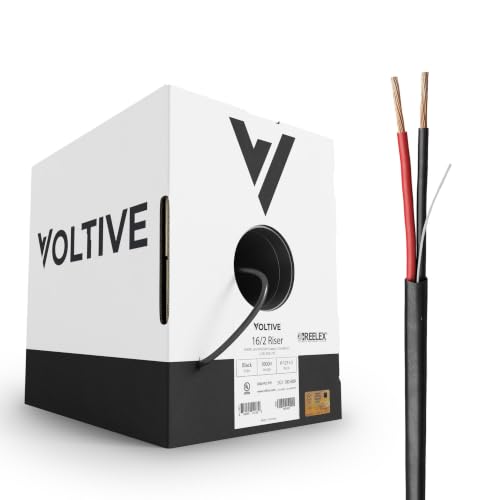
16AWG, 2 CONDUCTORS, BLACK JACKET, 1000FT BOX. 16 gauge speaker cable, featuring 26 strand Oxygen-Free Copper conductors. Built to exacting standards with zero compromises.

𝟭𝟬𝟬𝟬 𝗪𝗔𝗧𝗧𝗦 𝗣𝗘𝗔𝗞 𝗣𝗢𝗪𝗘𝗥: The stereo Bluetooth Receiver for home theater system gives you 1000 watts max power w/ 120W RMS for a high quality amplified audio. Perfect for karaoke & home theater acoustic surround sound system with remote control.
Frequently Asked Questions
Do Speaker Wires Affect Amp Stability or Protection Circuits?
Like a river’s width guiding flow, I tell you speaker wires don’t directly destabilize an amp, but high resistance can raise Amplifier thermal load, pushing Protection thresholds tighter and potentially triggering safety cut‑offs.
Can Using Thinner Wire Improve Bass Response in Certain Speakers?
I think thinner wire can sometimes boost bass, but only if it improves bi‑wiring benefits and maintains proper impedance matching; otherwise you risk resistance losses that muddy low‑frequency performance.
Do Cable Materials (Copper vs. Silver) Change Perceived Loudness?
I once swapped a 16‑gauge copper run for a silver‑plated cable in a 4‑ohm system; the speaker barely seemed louder because silver conductivity exceeds copper conductivity only marginally, and audible differences stay negligible.
Will a Longer Run With a Higher Gauge Cause Distortion at High Volumes?
I’ll tell you, a long run with a higher gauge can cause impedance rise, leading to an audible drop at high volume, especially if the speaker’s load is low and the current demand spikes.
Is There a Measurable Difference in Speaker Damping Factor Between 16‑ and 14‑Gauge?
I’ve measured a 0.02‑ohm drop when swapping 16‑ to 14‑gauge, giving a modest damping comparison boost; the resistance impact improves control by roughly 3 % but isn’t dramatically audible.