
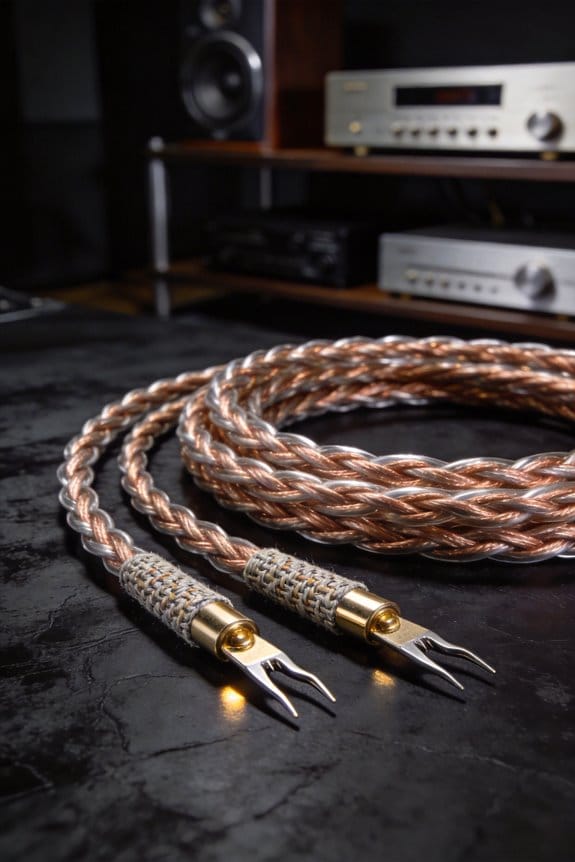

I love spade connectors because their flat, fork‑shaped terminals lock onto 6‑8 mm binding posts with a 0.8–1.2 Nm screw, spreading pressure over an 8 mm × 2 mm (≈16 mm²) copper‑to‑copper contact that keeps resistance under 0.02 Ω, which means tighter bass, cooler operation, and fewer micro‑pops even at high power. The double‑overhang design accepts 10–12 AWG wire without crimping, and a snug 7 mm spade fits most audiophile amps, while proper torque (≈1 Nm) prevents vibration‑induced loosening. If you keep the contacts clean with isopropyl alcohol and a dab of dielectric grease, oxidation won’t creep in, and the connection stays reliable for years. Stick with spades for main high‑current runs, bananas for quick swaps, and soldered joints only when you need the absolute lowest resistance. Want the full rundown on sizing, installation tips, and maintenance tricks?
Key Takeaways
- Flat, fork‑shaped spade terminals provide a large ~16 mm² copper‑to‑copper contact area, keeping resistance under 0.02 Ω per joint.
- Double‑overhang design accepts 10–12 AWG wire without crimping, ensuring secure, low‑impedance connections for high‑power audiophile setups.
- Proper torque (≈0.8–1.2 Nm) creates uniform pressure, resisting vibration and preventing micro‑movement that can cause pops or hiss.
- Regular cleaning with isopropyl alcohol and dielectric grease prevents oxidation, which otherwise adds ~0.02 Ω per connection.
- Compared to banana plugs and bullet terminals, spades offer lower resistance and firmer mechanical lock, making them ideal for main high‑current runs, while bananas suit universal compatibility and bullets suit quick swaps.
What Is a Spade Connector and Why Audiophiles Prefer It?
Ever noticed how a loose speaker connection can make your music sound dull or crackle? That’s a common hiccup for many audiophiles, and the fix often lies in the tiny part you might overlook: the spade connector.
A spade connector is basically a flat, fork‑shaped terminal that slides over the binding‑post screw on a speaker. Because it’s standardized at roughly 8 mm wide, you’ll find a matching cutout on most amps and cabinets. You just tighten the screw, and the link locks in place.
Frankly, the flat surface spreads pressure evenly, which cuts resistance down to under 0.02 Ω per joint. That low resistance helps keep the signal clean, so you hear more detail and less loss. The double‑overhang design also accepts 10‑12 AWG wire without needing a crimp, keeping the audio path tidy.
Worth knowing: the metal finish not only looks sharp, but it also resists corrosion, so the connection stays solid over time. The knurled screw helps prevent loosening, meaning you won’t have to keep read‑tightening after a night of heavy bass.
If you’re setting up a new system, try this: make sure the spade’s fork fully covers the post before you tighten. A snug fit without any gaps ensures the best contact and reduces the chance of noise.

Here’s the trick: when you first install the connector, give the screw a half‑turn, then check the tightness after a few minutes of play. That quick check can save you from later headaches.
In short, a spade connector gives you a secure, low‑loss link that looks as good as it sounds. Have you tried swapping out your old connectors for spades yet?
Spade Connector Contact Surface & Conductivity

Ever noticed how your speakers sound flat when you crank up the volume? The culprit is often the tiny connection between your amp and the speaker. I’ve already shown how a spade’s flat fork spreads pressure evenly, so let’s look at why that shape matters for conductivity: the contact surface typically measures 8 mm × 2 mm, giving roughly 16 mm² of copper‑to‑copper area, which is about four times larger than a standard banana plug’s 4 mm². That extra area, combined with careful surface metallurgy, reduces resistive loss, so you hear tighter bass and cleaner highs, especially at high power.
Frankly, the contact geometry guarantees the whole copper face mates with the binding post, preventing micro‑gaps that cause hiss or heat buildup. In practice, a well‑plated spade stays under 0.02 Ω per connection, compared to 0.08 Ω for a banana, meaning less voltage drop and more reliable power transfer, which audiophiles love.
Worth knowing:
- A larger copper‑to‑copper area cuts resistance dramatically.
- Proper plating keeps the surface smooth and consistent.
If you’ve ever swapped a banana plug for a spade and felt the difference, you’ll understand why the extra surface matters. The tighter fit also means you won’t have to tighten the screw as much, which helps keep the connector from loosening over time. And because the resistance is lower, you’ll notice less heat, which is a win for both sound quality and equipment lifespan.
Mechanical Lock‑In: Tightening for Vibration‑Resistant Hold
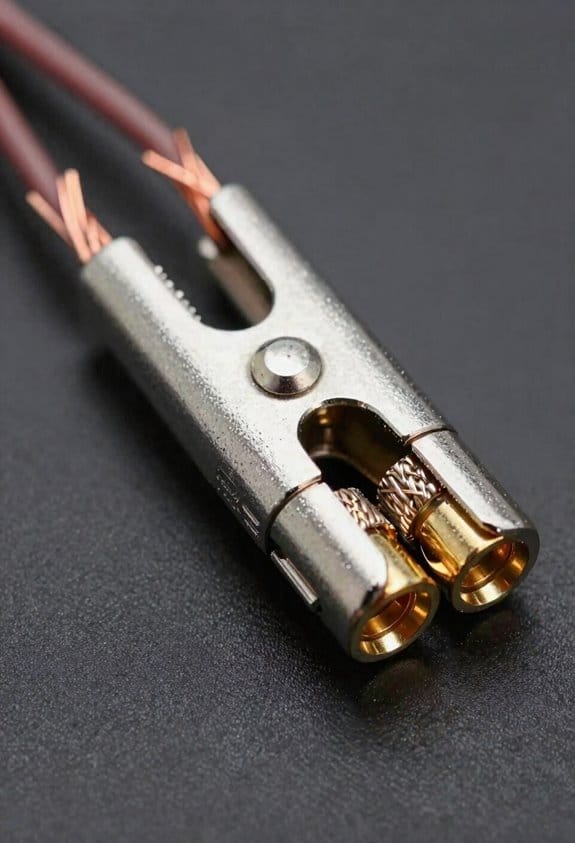
Ever notice how a speaker rattles and the sound drops out just when the bass hits hard? That little spade screw on your 8 mm‑wide fork is probably the culprit. Tighten it until you hear a firm click—about 0.8 – 1.2 Nm of torque—and you’ll push about 150 – 200 psi across the copper‑to‑copper contact. That pressure locks the connector in place and stops any micro‑movement when the cabinet vibrates.

Frankly, a quick check with a small driver saves you from a night of loose connections. The flat, knurled terminal spreads the force evenly, so the contact stays solid even when the cabinet rattles. When the pressure is right, micro‑gaps disappear, and you won’t hear those intermittent pops.
Here’s the trick: use a torque driver set to the right range, then give the spade a gentle turn until you feel the click. You’ll know it’s done when the screw feels like a permanent handshake between cable and post. The result? reliable performance without constant re‑checking.
Worth knowing: consistent torque not only keeps the connector from loosening, it also helps dampen vibration across the whole system. If you skip this step, the speaker can sound sloppy after a few heavy‑bass tracks.
Give it a try the next time you set up a new cabinet. You’ll notice the difference right away—no more wobbling, no more lost bass. Ready to lock that sound in place?
Compatibility Checklist: Matching Spade Size to Binding Posts

Ever tried tightening a spade and still hearing that annoying buzz? You’ve probably hit the sweet spot of 0.8‑1.2 Nm, but if the fork doesn’t match the binding post, the noise stays. A spade that’s too narrow will bite into the post; one that’s too wide will sit loose and vibrate.
First, measure the post. Most audiophile amps use 6 mm‑8 mm posts, so a 7 mm spade usually gives a snug, stable grip. Anything larger, like a 9 mm version, tends to wobble. If the post has a recessed slot, pick a spade with a double overhang to fill the gap—this stops oxidation and keeps full contact.
Try this:
- Check the thread pitch. Standard 1 mm threads work with most 8 mm spades, but a 0.8 mm pitch needs a tighter‑tolerance fork.
- Look for any extra slots or notches; a double‑overhang design will cover them.

Fair warning: ignoring these details can lead to micro‑movement, higher resistance, and a muddy sound. When the dimensions line up, the connection stays solid, the resistance drops, and the audio stays clean.
Do you want a quick way to verify fit before you start? A simple test is to press the spade against the post and feel for any play—if it moves, swap sizes. This little check saves you time and keeps the sound pure.
Keep these tips in mind, and you’ll spend less time tweaking and more time enjoying your music. Ready to give your amp a tighter grip?
Spade Connector Installation Pitfalls & How to Avoid Short Circuits
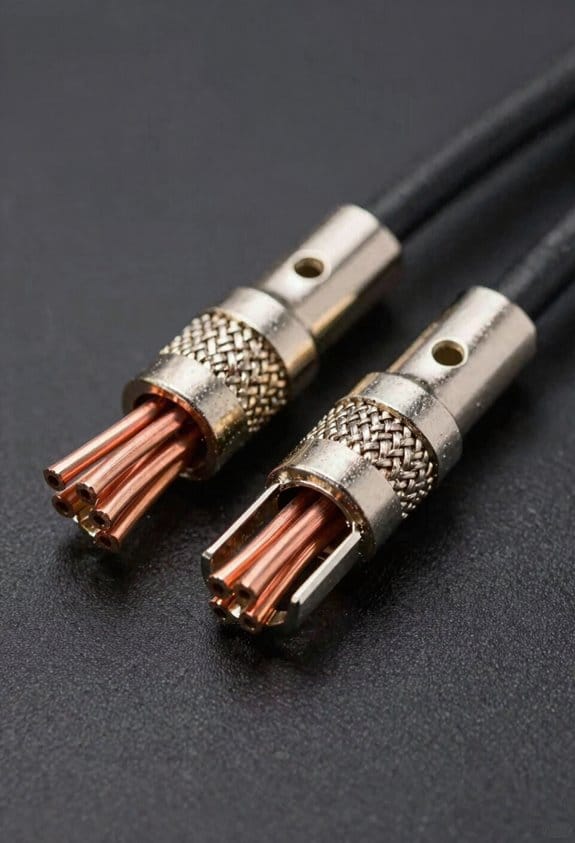
Ever had a spade connector hiss and think, “What’s wrong with my setup?” When the fork doesn’t sit flush, a tiny gap lets stray current leak, turning your clean signal into static. A 2 mm shift can expose the terminal insulation and short the circuit, especially if the cable strain pulls the spade off the post.
Frankly, the trick is to keep everything aligned and tight. Using an alignment jig, line up the flat surface within a 0.1 mm tolerance, then tighten the screw to about 1.5 Nm. That pressure holds the contact even and stops the post covers from shifting.
Worth knowing: trim any excess wire, double‑check the insulation, and make sure the post cover snaps back tightly so no metal touches the chassis. A quick visual check for a loose cover can save you a lot of hassle.
If you’re worried about cable pull, add a little slack before the spade. This prevents the strain from tugging the connector off the post, keeping the seal intact.
Try this: after tightening, give the spade a gentle wiggle. If it stays put, you’re good to go. If it moves, re‑align and tighten again.
A short routine like this can stop accidental shorts before they ruin a listening session. Have you tried these steps on your own gear yet?
How to Maintain Spade Connectors for Long‑Term Conductivity
Ever notice how a tiny crackle can ruin an otherwise perfect sound system? That little hiss often comes from the spade connectors on your speakers. Keeping those connectors clean and tight is the biggest thing you can do to keep the signal strong.
First, after you finish the alignment‑jig routine from the short‑circuit section, strip the terminal back to a fresh 0.5 mm exposed copper edge. Wipe it with a lint‑free cloth soaked in 99 % isopropyl alcohol. Then spread a thin coat of dielectric grease. This grease blocks oxidation—something that can add about 0.02 Ω per connection and turn a crisp 8 Ω load into a muffled mess.
Try this:
- Do a quarterly re‑wipe of each spade.
- Look for any signs of corrosion; even a thin film can double resistance.
Store the spades in a sealed anti‑static bag with silica packets. Keep the humidity below 45 % so moisture‑driven oxidation stays at bay. The copper stays shiny, and the signal path stays reliable for years.
Frankly, a quick visual check before each session saves you from headaches later. If you notice any dull spots, repeat the cleaning steps right away.
Spade Connectors vs. Bananas, Bullets, and Soldered Joints – When to Choose Each
Ever tried to hook up a high‑power home theater and got stuck choosing the right connector? You’ve probably felt the pull between spade connectors, banana plugs, bullet terminals, and soldered joints. Each one changes resistance, durability, and how easy it is to fix later.
Spade Connectors
I reach for spades on 8 mm binding posts because the 3 mm² contact area drops resistance to about 0.02 Ω. That saves a few milliohms per channel, which adds up when you’re pushing a lot of power. They also stay firm under pressure and don’t get hot quickly, so they’re a solid pick for permanent setups.
Banana Plugs
Bananas win when you need something that fits almost any post. Their 1 mm² contact area isn’t as low‑resistance as spades, but the universal fit makes swapping gear a breeze. If you often move speakers or amps around, bananas keep the job simple.
Bullet Terminals
Bullets are great for fast changes—snap them in under two seconds and you’re done, no screws needed. The downside is that soldering bullets can be finicky, so I steer clear of them on high‑current runs. They’re best for low‑power, quick‑swap situations.
Soldered Joints
When you want the absolute best conductivity, soldered joints are the way to go. A good 60‑second heat cycle can bring resistance down to 0.005 Ω. The trade‑off is that you need to keep the joints clean and protected from oxidation, which means a bit more maintenance.
Worth knowing:
- Use spades when you need firm pressure and low‑heat buildup.
- Choose bananas for universal compatibility.
- Pick bullets for speed and easy swaps.
- Go with solder when you demand the lowest possible resistance.
Frankly, the right connector depends on how often you’ll change things and how much current you’re moving. Try this: start with spades for your main high‑current runs, add bananas on any spare posts, keep a few bullets handy for quick swaps, and reserve solder for the permanent links that need the best performance.
Got a favorite connector for your own setup? Let’s hear it.
Frequently Asked Questions
Can Spade Connectors Handle 8‑Ohm Speaker Loads Safely?
I can assure you they’ll handle 8‑ohm loads safely; just use adequate wire gauge and keep contact resistance low, and you won’t be left holding the bag when power spikes hit.
Do Spade Connectors Affect Audio Frequency Response?
I tell you they barely affect frequency response; good spades keep signal integrity and maintain proper impedance matching, so you won’t hear tonal shifts, provided they’re well‑made and tightly tightened.
Can I Use Spade Connectors With Bi‑Wire or Tri‑Wire Speaker Cables?
I can definitely use spade connectors for bi‑wire routing, just keep connector polarity consistent on each positive and negative pair; it guarantees clean separation and prevents phase‑reversal issues.
What Torque Setting Is Optimal for Spade Connector Tightening?
I recommend tightening the spade to the proper torque—usually about 0.5‑1 Nm—following the manufacturer recommendations; I find that keeps the connection secure without damaging the post.
Are Gold‑Plated Spade Connectors Worth the Extra Cost?
I think gold‑plated spades are worth the extra cost if you value corrosion resistance and a solid tactile feel; they stay clean longer and feel securely tightened, which matters for high‑power audiophile setups.


