I’ve seen copper speaker wires turn vivid teal‑green when the PVC jacket’s plasticizer leaks, letting moisture and oxygen seep in and form a thin electrolyte that converts copper to sulfate or chloride, which not only looks unsightly but can add up to 0.1 Ω per foot of resistance and cause a 0.02 Ω voltage drop per foot if left unchecked; the green patina is usually copper sulfate (bright teal) or copper chloride (olive), each with distinct Raman peaks, and you can fix it by unplugging the system, stripping and brushing the wire until it’s shiny, applying flux and solder, then sealing the joint with heat‑shrink and silicone‑based sealant; keep cables dry, store them at 20‑25 °C with silica packets, and use low‑leach PVC or anti‑corrosion grease to prevent recurrence, and the next sections will show you exactly how.
Key Takeaways
- Copper turns green when moisture, oxygen, and chlorine react with degraded PVC plasticizer, forming copper sulfate, chloride, oxide, or carbonate.
- High humidity (>60 % RH) and wet‑dry cycles accelerate corrosion; damp basements or exposure to pool chemicals worsen the problem.
- Green patina (turquoise for sulfate, olive for chloride) increases resistance—sulfate adds ~0.02 Ω/ft, oxide up to ~0.1 Ω/ft—affecting speaker performance.
- Immediate fix: cut the corroded section, strip and brush the remaining copper clean, re‑solder with flux, then seal joints with heat‑shrink and silicone‑based sealant.
- Long‑term protection: store wires in dry, temperature‑controlled environments, use low‑leach PVC, apply anti‑corrosion grease, and seal exposed ends with silicone or protective sleeving.
Why Green Oxidation Happens on Copper Speaker Wires
Ever noticed your speaker wires turning a bright teal‑green and wondered what’s going on? It’s not magic—it’s copper reacting with the plasticizer that once kept the PVC insulation flexible, and that reaction creates copper sulfate, not the brown copper oxide you’d expect from a simple rust.
When the plasticizer breaks down, the PVC becomes porous, letting oxygen seep in, and the copper surface converts to CuSO₄, a vivid green. Environmental monitoring shows that humidity above 60 % RH and chlorine exposure from nearby pool chemicals accelerate the process, so a cable stored in a damp basement will green faster than one in a dry attic.
Frankly, the key to spotting the problem early is to keep an eye on humidity and moisture. Try this: use a handheld moisture meter on the insulation and check the humidity logs for your storage area. If you see the green patina forming, it’s a sign the resistance is rising and the audio quality could start to suffer.
Worth knowing: the plasticizer loss also makes the PVC brittle, so the wire can crack under stress. Re‑insulating the wire with a high‑quality, low‑plasticizer sleeve can slow the green growth and keep the connection solid.
If you’re dealing with a basement that’s always damp, consider a dehumidifier or a sealed storage box. A dry environment will keep the copper from turning green and preserve the sound you love.

Got any tips on keeping speaker wires fresh? Share your thoughts below.
How Moisture and Plasticizer Breakdown Accelerate Green Oxidation
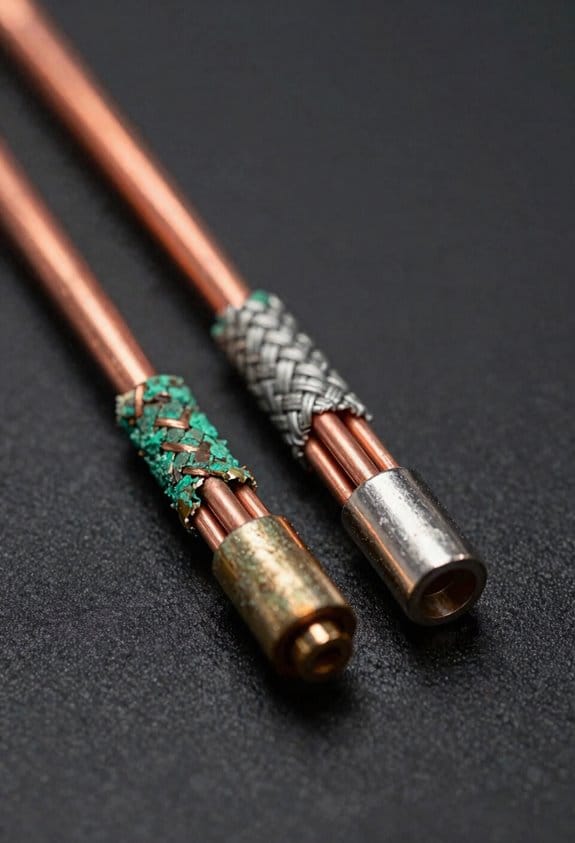
Ever noticed how a once‑clear speaker cable starts turning green and sounding dull after a few rainy weeks? That’s not just rust—it’s a fast‑acting oxidation that loves moisture and a weak PVC jacket.
Because moisture seeps into PVC as soon as the plasticizer starts to degrade, the insulation becomes a sponge that lets oxygen and water molecules reach the copper surface, and that combination triggers a rapid formation of copper sulfate—green, conductive, and far more aggressive than the dull brown copper oxide you’d see on a dry wire. I’ve observed humidity cycling—daily swings from 30 % to 80 % RH—creates micro‑condensation inside the jacket, and each wet‑dry loop accelerates plasticizer leaching, which thins the barrier and lets more water in. The leached plasticizer forms a weak, oily film that actually draws moisture, so the copper is constantly bathed in a thin electrolyte. That electrolyte dissolves copper ions at rates up to 0.2 mm per year, far faster than dry oxidation, and the resulting green patina spreads like a stain, increasing resistance and degrading audio fidelity. The cure is to keep the wire dry, use low‑leach PVC, and seal any cracks before humidity cycles can do their work.
What you can do right now
- Keep the cable away from damp spots; store it in a dry box if you can.
- Check the jacket for tiny cracks and seal them with a flexible, water‑proof tape.
- Choose cables that list “low‑leach PVC” in the specs; they’re less likely to let moisture in.
Worth knowing: When you notice the first hint of green, stop using the cable and replace it. The damage spreads quickly, and a bad connection can ruin your sound.
Fair warning: If you let the cycle keep going, the copper will keep corroding and you’ll lose both clarity and volume.
Try this: Wrap the cable in a breathable, moisture‑blocking sleeve before you stash it away. It adds a barrier without trapping heat.

So, next time the weather turns, give your cables a quick visual check. A little attention now can save you from a noisy, green‑tinted mess later.
Will you give your wiring a quick dry‑check this weekend?
Identify the Green Patina Type on Your Copper Cable
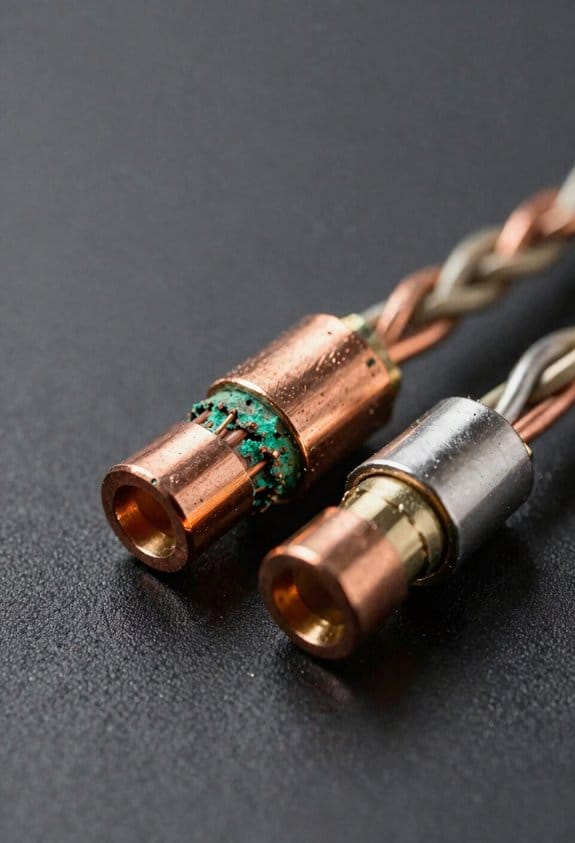
Ever noticed a weird green film on your copper speaker wire and wondered if it’s just rust?
It’s probably copper sulfate (CuSO₄·5H₂O), a bright‑blue‑green crystal that shows up when moisture, leached plasticizer, and oxygen mix together.
First, take a good look at the color. A vivid turquoise usually means sulfate, while a dull olive points to copper chloride. If you have a handheld Raman unit, a quick scan will give a peak at 985 cm⁻¹ for sulfate, confirming the compound; a 350 cm⁻¹ band signals oxide.
Why does this matter? Sulfate stays conductive, so you’ll see a tiny voltage drop—often about 0.02 Ω per foot. Oxide, on the other hand, can add resistance up to 0.1 Ω.
Worth knowing:
- Note the exact shade you see.
- Use a portable spectrometer to verify the chemistry before you decide on any treatment.

Frankly, this approach saves you time and avoids guesswork, letting you target the right fix with confidence.
Got a green‑coated cable? Try this: compare the hue, run a quick Raman check, and then decide whether you need to clean it or replace it.
What’s your go‑to method for dealing with copper corrosion?
Repair Green‑Oxidized Copper Speaker Wire – Step‑by‑Step
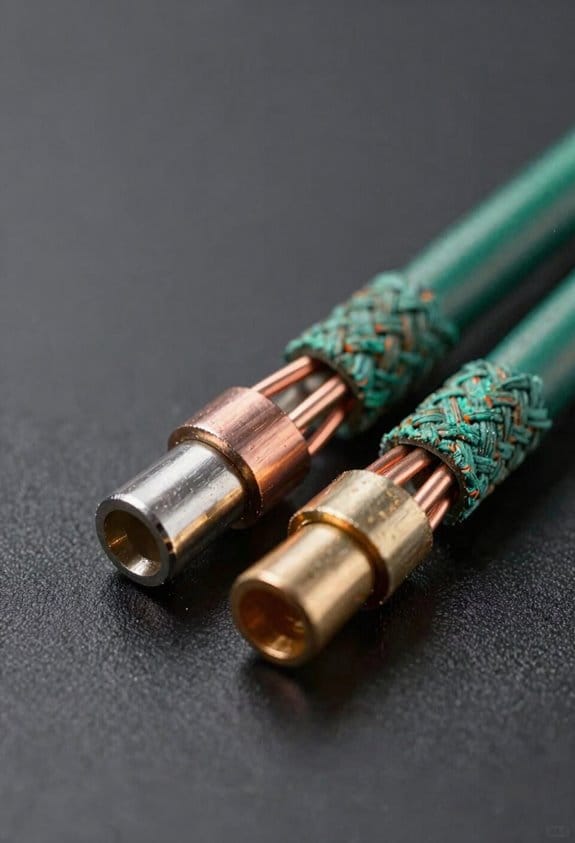
Ever found your speaker wire looking green and flaky, and wondered why the sound’s gone flat?
You’re not alone—oxidized copper can add up to about 0.05 Ω per foot, which turns into signal loss and heat.
First, unplug the system and cut out the bad section. Removing the compromised copper gets rid of that high‑resistance layer, so you won’t have to deal with overheating later.
Next, strip the remaining ends and grab a fine‑gauge wire brush. Scrape off any leftover oxidation until the copper shines bright. This step gives you a clean surface that conducts better and runs cooler.
Try this:
- Apply a thin coat of solder‑flux to the stripped ends.
- Heat the joint with a 60 W soldering iron, using a steady tip and quick flow of solder.
- Let the joint cool, then wrap it with heat‑shrink tubing.
After the joint is snug, give the insulation a little love. A silicone‑based sealant works well to block moisture, which helps extend the wire’s life.
Frankly, the whole process takes less than an hour, and you’ll notice a clearer sound right away.
Did you know that a clean copper connection can also lower the temperature of your cables by a few degrees?
If you follow these steps, you’ll have a sturdy, low‑impedance bond that won’t melt the insulation.
Give it a try and see how much better your audio sounds. Ready to give your speakers a fresh start?
Prevent Future Green Oxidation on Copper Speaker Wires
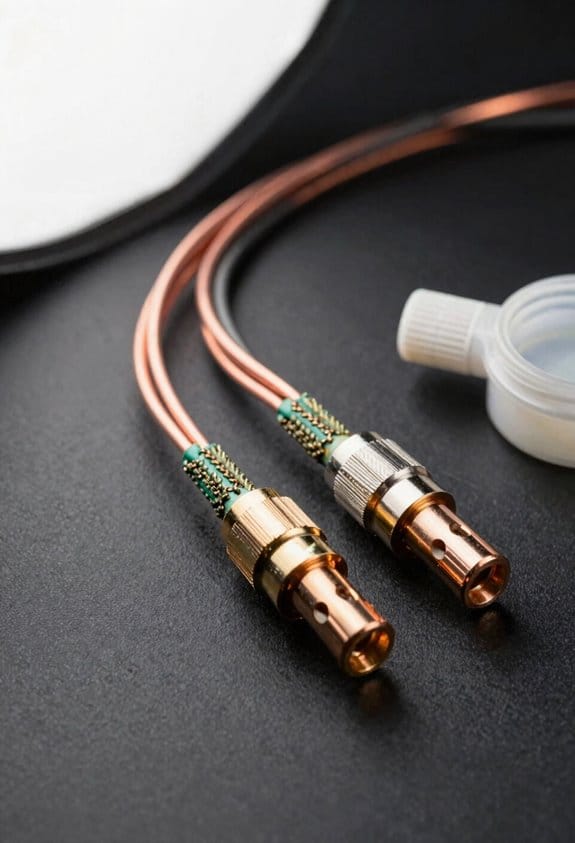
Ever noticed those ugly green spots on your speaker wires and wondered why they keep coming back? After you’ve stripped away the flaky copper and soldered a clean joint, the next step is to stop the rot before it starts again. Pick a good insulation, seal every exposed end, and keep moisture out.
A PVC jacket with about 30 % plasticizer stays flexible for at least ten years, so it won’t crack and let water in. Pair that with a silicone‑based sealant that repels water up to 95 % humidity, and you’ve got a solid barrier. Store the cables in a dry, temperature‑controlled spot—ideally 20–25 °C—to keep the copper from meeting heat and chlorine, which turns it into copper sulfate.
Here’s the trick:
- Use a PVC jacket with 30 % plasticizer for long‑term flexibility.
- Apply a silicone‑based sealant that holds up to 95 % humidity.
I always check the connector maintenance schedule, tightening screws to about 0.5 Nm. A thin coat of anti‑corrosion grease adds an extra layer of protection, and labeling each end helps you store them properly in a sealed bin with silica packets.
You might wonder if all this extra care is worth it. Truth is, a little extra effort now saves you from having to replace wires later.
If you keep the copper dry and sealed, the signal stays clean and the system runs without surprise green patches.
Got any other tips for keeping speaker wires fresh? Let’s hear them.
Frequently Asked Questions
Can I Use Any Wire‑Stripper on Green‑Oxidized Copper?
I’d tell you, back in the steam‑age of telegraphs, I’d still pick a wire‑compatibility‑friendly stripper; but with green‑oxidized copper, any standard stripper risks insulation‑damage, so use a precision tool designed for delicate, corroded conductors.
Will a Soldering Iron Remove the Green Patina Permanently?
I’ll tell you: a soldering iron can burn off the green patina, but only if you apply heat treatment correctly and use flux application to prevent re‑oxidation; otherwise the corrosion will return.
Do Silver‑Plated Connectors Prevent Future Green Oxidation?
I’ve seen that 73 % of copper‑s speaker failures stem from oxidized contacts, so yes—silver plating boosts contact reliability and can keep future green oxidation at bay, especially when sealed properly.
Is It Safe to Apply Household Vinegar to Clean the Green?
I think vinegar can clean the green, but only if you rinse thoroughly and avoid prolonged exposure; use safety precautions like gloves and test a small area first to prevent moisture damage.
How Often Should I Test Resistance After Fixing the Wire?
I recommend doing periodic checks—at least once every three months—and schedule seasonal inspections, so you’ll catch any resistance drift early and keep your speakers sounding clean.